
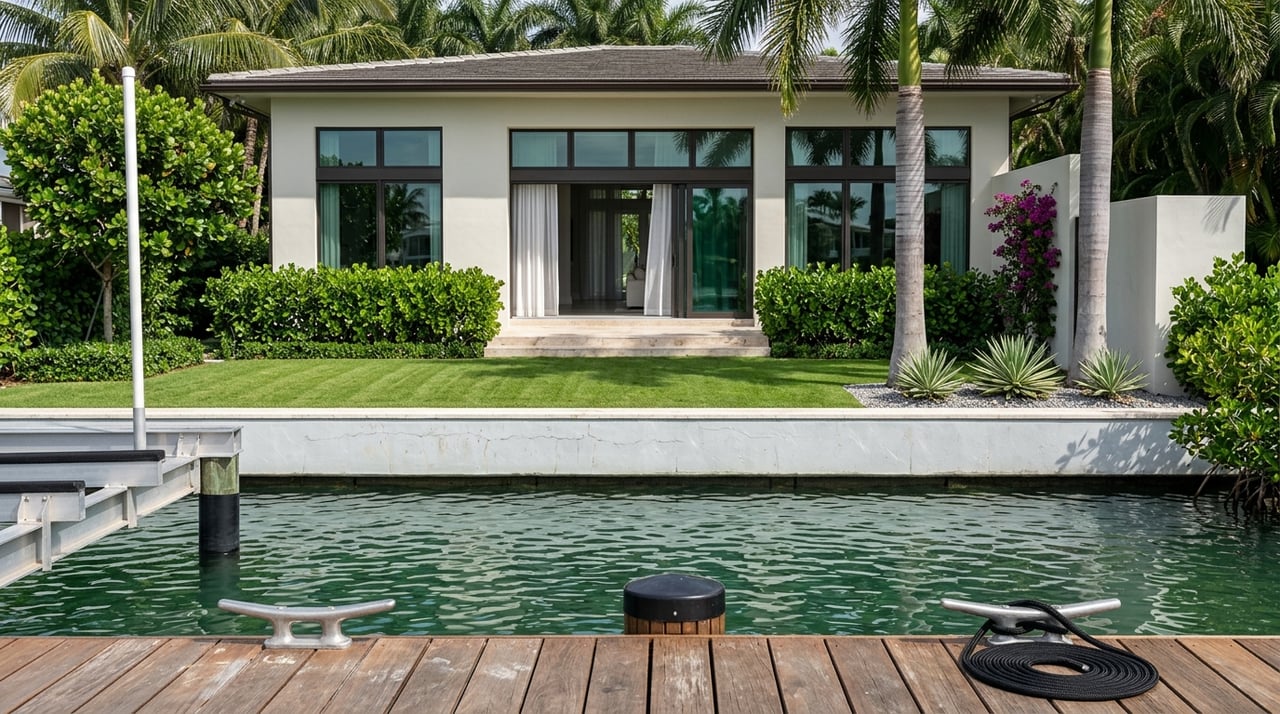
Choosing Between Riverfront and Canal Tequesta Waterfront Homes
If you want a Tequesta home that truly works for boating, the biggest question is often not whether you want waterfront. It is what kind of waterfront fits the way you use your boat and your property. Riverfront and canal homes can both offer navigable access, but they live very differently day to day. This guide will help you compare the two so you can focus on the trade-offs that matter most before you buy. Let’s dive in.
Tequesta is built around water. The village sits between the Loxahatchee River, the Indian River, and the Atlantic Ocean, and local stormwater standards are designed to help protect those waterways and related natural resources, according to the Village of Tequesta.
That context matters when you compare riverfront and canal homes. In Tequesta, a waterfront purchase is not only about having a dock behind the house. It is also about how you want to live on a waterway system with a strong environmental identity, active boating use, and changing conditions.
The nearby lower river and preserve areas support activities like motorboating, sailing, canoeing, kayaking, birding, and nature viewing, which adds to the appeal of the area’s boating lifestyle, as noted by the Village of Tequesta. For many buyers, that makes riverfront ownership feel more open and scenic, while canal-front ownership can feel more private and sheltered.
For many boaters, riverfront homes are the dream option. They often offer broader water views, a stronger sense of openness, and a more prominent waterfront setting than canal lots.
Based on current local listing examples in the research, true river frontage also tends to command the highest premium in Tequesta. That is especially true when a property combines wide frontage, larger lot size, and substantial dock or lift infrastructure.
Riverfront can be especially appealing if you value:
Still, the benefits come with practical considerations. Open water can mean more wake exposure, more visible boat traffic, and a setting that feels less protected than a canal.
Canal homes can be a very smart choice for active boaters who care most about function. They often provide navigable access with a more contained residential setting and, in many cases, a lower entry price than true riverfront.
Local examples in the research suggest canal homes can still deliver meaningful boating utility, including private lifts and navigable water access. For many buyers, the appeal is simple: you may trade some view width and visual drama for a quieter, more sheltered dock experience.
Canal homes often stand out for:
That combination can work well if your priority is keeping a boat at home without paying the premium usually attached to broad river frontage.
One of the biggest lifestyle differences between riverfront and canal homes is wake exposure. This is not just a comfort issue. It can affect how your dock feels, how your boat sits at the lift, and how calm the water is behind your home.
The Florida Fish and Wildlife Conservation Commission notes that manatees prefer calmer rivers, estuaries, bays, and canals, and its boating rules distinguish between idle-speed/no-wake and slow-speed/minimum-wake operation. You can review those boating and manatee protection considerations through the FWC manatee guidance.
In practical terms, riverfront homes may see more noticeable passing wake and more active traffic depending on their position. Canal homes often feel calmer and more protected, which many owners appreciate when loading guests, handling lines, or storing a boat behind the house.
Depth is one of the most important boating questions in Tequesta, and it should be checked property by property. A neighborhood may be described as navigable, but that does not guarantee the depth at your specific dock, along your route, or at the time you plan to use the boat.
The Jupiter Inlet District states that lower Loxahatchee River speed regulations change twice each year and that it maintains channel markers in the river forks and inlet for navigation safety. Its navigational resources also note that published depths are only a snapshot and conditions can change, which is why buyers should verify details carefully through the Jupiter Inlet District navigational aids page.
This matters for both riverfront and canal homes. A river address may sound superior on paper, but a canal property with the right depth and route can be more practical for your specific boat.
Many buyers focus on whether a Tequesta property offers ocean access, and that is important. But the route matters just as much as the words in a listing description.
According to NOAA’s Coast Pilot for the area, Jupiter Inlet can be dangerous and especially hazardous for small boats not designed for open seas, with shifting sandbars that may sit only 1 to 2 feet below the surface. So even if a home offers access toward the ocean, safe use of that route still depends on vessel type, conditions, and local knowledge.
That is why a boater should think beyond simple marketing phrases like “easy ocean access.” A better approach is to ask how your boat size, draft, height, and intended use fit the full route from dock to inlet.
Dockage is another area where riverfront and canal homes can differ in meaningful ways. The Village of Tequesta states that dock and pier rules vary by waterway type, including the Loxahatchee River, the Intracoastal, and canals, and you can review those basics in the village FAQs.
The village’s dock and boat-lift permit process requires items such as DEP approval or self-certification, a current survey, a site plan, and engineered plans. On canal lots, the site plan must show canal width and any protrusion from the property line, and the village states that no marine structure or docked watercraft may protrude more than 10 feet beyond the adjacent side-property extension, as outlined in the dock and boat-lift permit materials.
This is one reason canal homes require careful review. Even when a canal lot looks ideal at first glance, lot geometry and canal-width limits can shape what kind of dock or lift setup is realistically possible.
In Tequesta, regulation does not stop at the dock. The village also requires a no-fee permit for watercraft parking and storage at residences, including condos and common areas, according to the boat permit requirement page.
That detail matters if you keep a trailer, store personal watercraft, or are comparing a single-family home with another type of residence. It is a reminder that waterfront ownership here should be evaluated at the property level, not just by looking at the seawall or lift.
For some buyers, the deciding factor is not depth. It is height. Even if a property has suitable water depth and dockage, your route may still be constrained by bridge clearance.
The Jupiter Inlet District’s boater guide lists nearby Intracoastal bridge clearances of 26, 26, and 35 feet on the route through the Jupiter and Tequesta area. If you own a taller vessel, that can narrow your options quickly.
This issue can affect both riverfront and canal homes, but it becomes especially important when you are buying for a specific boat rather than a general boating lifestyle. A beautiful dock is only useful if your vessel can actually make the route comfortably.
Here is the practical side-by-side view for many Tequesta boaters:
| Feature | Riverfront Homes | Canal Homes |
|---|---|---|
| Water views | Wider and more open | More contained and residential |
| Wake exposure | Often higher | Often lower |
| Dock feel | More exposed | More sheltered |
| Price positioning | Usually commands a premium | Often lower entry point |
| Boating utility | Strong, but depends on site specifics | Strong, but depends on site specifics |
| Atmosphere | Scenic and prominent | Quiet and intimate |
The key point is simple: neither option is automatically better. The right fit depends on how you boat, what vessel you own, and how much importance you place on view, shelter, privacy, and budget.
If you are deciding between Tequesta riverfront and canal homes, start with your actual boating habits rather than the romance of the listing photos. Think about how often you go out, what type of boat you own, and whether your top priority is scenery, protection, flexibility, or value.
A helpful checklist includes:
For many buyers, riverfront wins on setting and long-term prestige. Canal-front wins on shelter, practicality, and a potentially more approachable entry point into Tequesta’s boating market.
When you are evaluating high-value waterfront property, details matter. Reback Realty brings local market perspective and practical waterfront insight to help you compare dockage, access, condition, and the real trade-offs behind each opportunity.
Stay up to date on the latest real estate trends.
We pride ourselves on informing and educating our clients in order to make better real estate decisions. Contact us today to find out how we can be of assistance to you!
Reback Realty
11420 US HIGHWAY 1 PMB 122 NORTH PALM BEACH FL 33408