
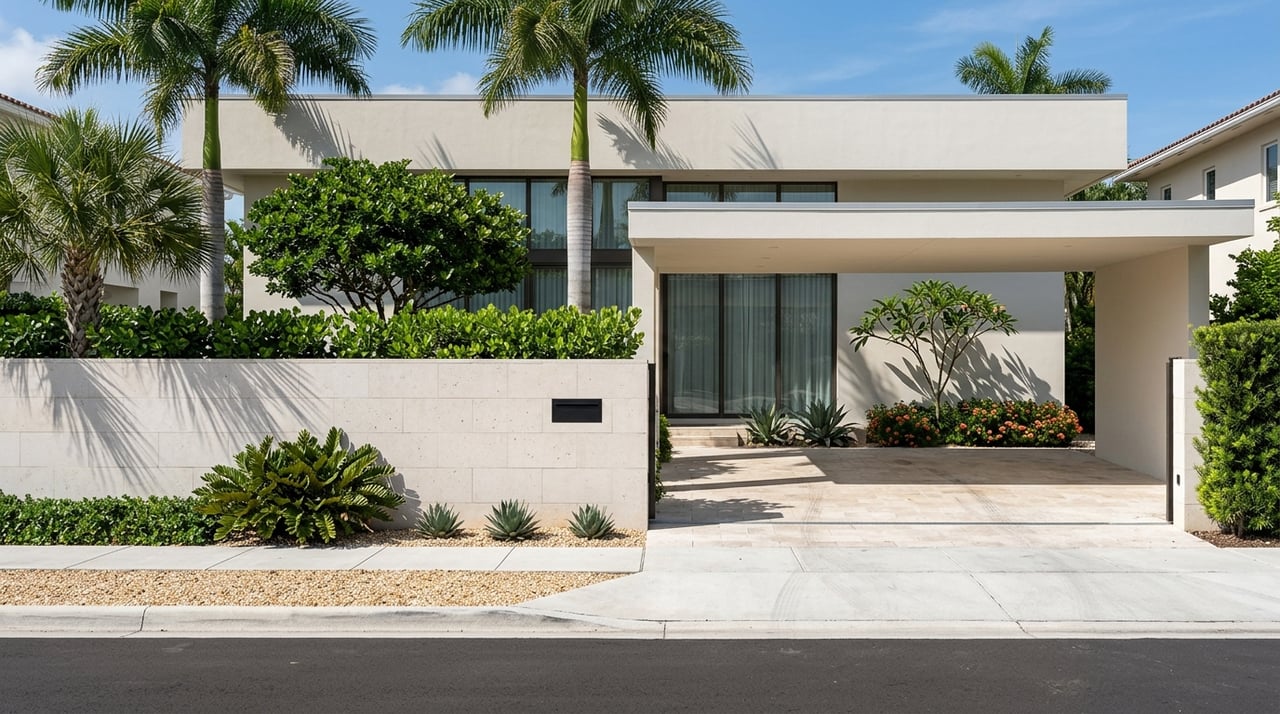
Gated vs Open-Waterfront Streets In North Palm Beach
If you are shopping North Palm Beach waterfront, one question matters more than many buyers expect: do you want a gated setting or an open street? In this market, that choice can shape your day-to-day experience just as much as the water itself. It affects privacy, street access, governance, dock expectations, and monthly carrying costs. If you are trying to decide which setup fits your goals, this guide will help you compare the tradeoffs clearly. Let’s dive in.
North Palm Beach is not a generic waterfront suburb. The Village sits between the Intracoastal Waterway, the Atlantic Ocean, and Lake Worth, and it supports that lifestyle with around-the-clock patrol services, a Marine Unit, and residents-only wet and dry marina storage plus boat-ramp access at Anchorage Park.
That local structure changes how buyers should think about waterfront property here. In many cases, the real decision is not simply waterfront versus inland. It is whether you prefer a more controlled, private environment or a more traditional village street with fewer formal layers.
Gated enclaves in North Palm Beach usually appeal to buyers who value privacy, controlled access, and a more curated street environment. They can also offer a stronger sense of consistency in how homesites, roads, and waterfront features are managed.
In this market, three of the clearest examples are Lost Tree Village, Harbour Isles, and Hidden Key. Each one handles privacy and governance a little differently, which is why it helps to look beyond the word “gated” alone.
Lost Tree Village is the best-known private enclave in the area. Public community information describes it as a roughly 450-acre gated community with private POA governance, and public materials also emphasize privacy, community oversight, and a highly managed setting.
For buyers, Lost Tree represents the classic high-control model. You are looking at a community where gate access, architectural oversight, and a more tightly curated atmosphere are all part of the ownership experience.
Harbour Isles offers a different version of gated waterfront living. Official district records identify it as a planned unit development in the Village of North Palm Beach, and current listings show gated-with-guard security, HOA services that include security, and deep-water access with no fixed bridges.
This matters if boating is central to your search. Harbour Isles is not only about controlled access. It is also a boating-oriented neighborhood where waterfront utility and a managed street environment are closely tied together.
Hidden Key is one of the most useful examples for buyers comparing options. Official records note a security gate system, while some current listings identify properties there as gated but with no HOA.
That makes Hidden Key an important North Palm Beach nuance. Gated does not always mean a high HOA structure, and no HOA does not always mean an open street. If you want controlled access without the same formal fee setup found in some other enclaves, this is the kind of distinction worth exploring carefully.
Open waterfront streets give you a different ownership feel. Instead of entering through a gatehouse, you are often buying into a traditional village-grid setting where each street and lot can have its own character.
Current listing snapshots show this pattern on streets like Laurel Road, Inlet Road, Waterway Drive, Anchorage Drive, and Country Club Drive, with several examples showing no HOA or no HOA fee indicators. These areas show that North Palm Beach still offers true waterfront homes outside a conventional gated framework.
One major advantage of open streets is variety. Current examples range from lots around 8,132 square feet or 9,147.6 square feet to larger sites of 0.33 acre, 0.34 acre, and even 0.83 acre on Anchorage Drive, based on current listing snapshots.
That range can be attractive if you want flexibility. Some buyers are looking for a standard Village lot, while others want a larger parcel with more room for redevelopment, outdoor living, or a custom waterfront footprint.
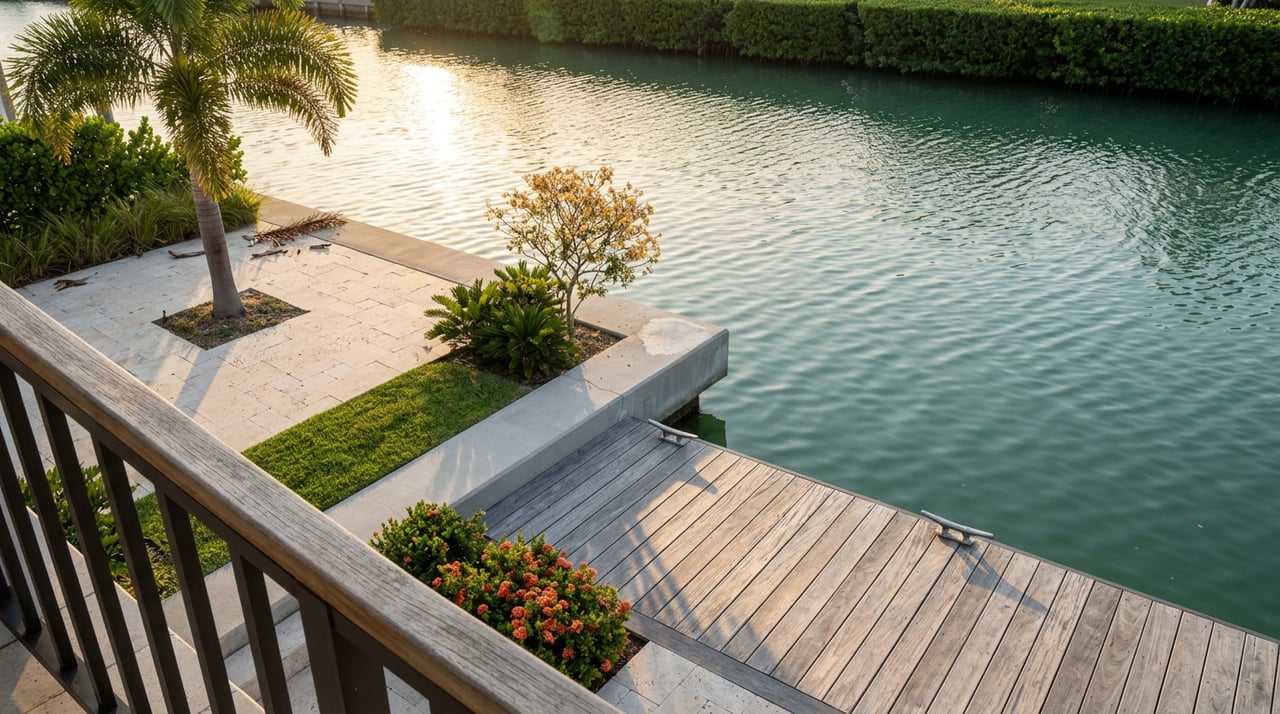
Open-street waterfront homes can also offer a wider mix of dock and lift configurations. For example, one Inlet Road property advertises 75 feet of waterfront frontage, a 40-foot dock, and a 10,000-pound lift, while a Waterway Drive listing advertises direct ocean access, a 70-foot composite dock, and 90 feet of water frontage.
That variability can be a plus if you have a very specific boating need. At the same time, it means you should evaluate each property on its own merits instead of assuming there is one standard dock format across the neighborhood.
Here is the practical difference many buyers feel once they narrow their search.
| Feature | Gated Waterfront Enclaves | Open Waterfront Streets |
|---|---|---|
| Street access | Controlled entry, often with gate systems or guards | Public village-street setting |
| Governance | May include POA or HOA oversight | Often no HOA, but still subject to Village rules |
| Privacy feel | Higher level of managed privacy | More traditional neighborhood feel |
| Dock consistency | More community-defined context | More lot-by-lot variation |
| Carrying costs | May include recurring HOA or POA costs | Often lower formal community fees |
| Buyer appeal | Privacy-first, curated setting | Flexibility-first, individualized lots |
Security is one of the clearest dividing lines. Gated enclaves such as Harbour Isles and Lost Tree layer private community controls on top of the Village’s broader public services.
On open streets, owners rely more on the Village’s patrol services and Marine Unit coverage rather than a neighborhood gatehouse. For some buyers, that is perfectly sufficient. For others, the additional separation of a gated entrance is a meaningful part of the purchase decision.
If you are focused on monthly carrying costs, this is where the comparison becomes especially important. Harbour Isles listings currently show an HOA fee, including one example at $659 per month, while Lost Tree operates with private governance and security infrastructure.
Open streets more often show no HOA or no HOA fee. Still, that does not mean no rules. The Village regulates property appearance, boats, RVs, dock work, seawalls, right-of-way work, and permitting, so every buyer should understand the local code environment before moving forward.
No matter which street type you prefer, boating details should be verified early. In North Palm Beach, your real fit may come down to dock length, lift capacity, bridge clearance, seawall condition, and how well the existing setup matches your boat.
The Village has permit submittal requirements for docks, boatlifts, and seawalls. That means you should treat surveys, permitting history, and waterfront improvements as core parts of your due diligence, not afterthoughts.
Current listing snapshots suggest that gate status matters, but it is not the only value driver. Resale and pricing appear to be influenced heavily by lot size, dock quality, no-fixed-bridge access, and overall neighborhood prestige.
The current range in open-street examples alone spans from about $715,000 on Lighthouse Drive to about $2.8 million on Anchorage Drive, about $3.0 million on Inlet Road, and about $7.78 million on Waterway Drive, based on current listing snapshots. Gated communities also sit at the luxury end of the market, with Harbour Isles in the mid-single-digit millions and Lost Tree continuing to set the private-enclave benchmark.
If you value privacy, a more controlled streetscape, and a highly managed luxury setting, gated enclaves like Lost Tree Village, Harbour Isles, or Hidden Key may feel like the better fit. They can offer a stronger sense of separation and a more consistent ownership environment.
If you prefer no HOA in many cases, more individual lot character, and a more traditional village-street feel, open waterfront streets may be more attractive. Some buyers also like the casual mobility that comes with the Village’s golf cart rules on Village-owned streets, excluding major arterials.
The right answer usually comes down to how you live. Some buyers want the structure of a private enclave. Others want boating utility and more flexibility without the gatehouse-and-dues model.
In North Palm Beach, the smartest waterfront purchase is rarely about curb appeal alone. It is about matching the property’s privacy level, governance structure, dock geometry, and long-term usability to the way you actually plan to enjoy the home. If you want help comparing streets, gated communities, dock setups, or redevelopment potential, Reback Realty offers discreet, local guidance grounded in North Palm Beach experience.
Stay up to date on the latest real estate trends.
We pride ourselves on informing and educating our clients in order to make better real estate decisions. Contact us today to find out how we can be of assistance to you!
Reback Realty
11420 US HIGHWAY 1 PMB 122 NORTH PALM BEACH FL 33408