
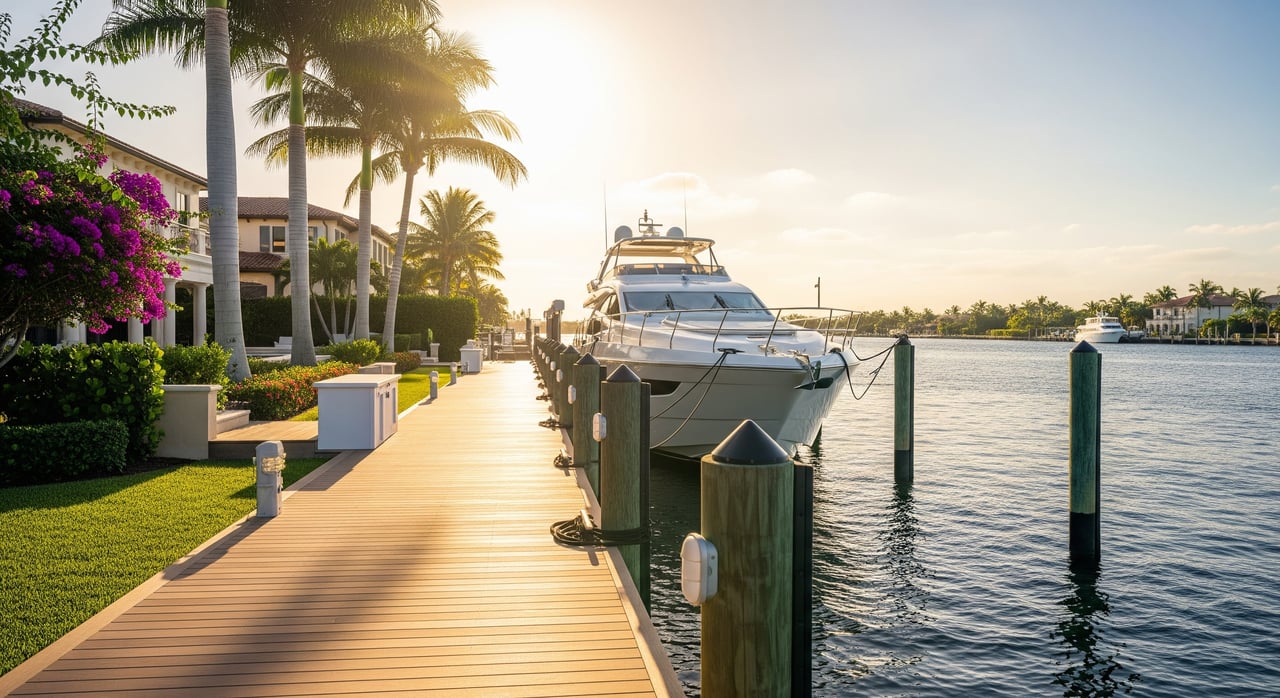
Where To Find Deep‑Water Docks In North Palm Beach
If your boat draws 5 to 8 feet, not every North Palm Beach dock will do. Depth varies from the Intracoastal Waterway to the side canals, and even well‑located slips can shoal over time. You want reliable access, clear ocean routes, and confidence that your dock fits your vessel. This guide shows you where to look, how to verify depth, and what to consider when you are buying or selling.
Let’s dive in.
North Palm Beach sits on the Lake Worth Lagoon, part of the Intracoastal Waterway. Most waterfront homes and marinas front the ICW or connect through short canals. Ocean access typically runs north to Jupiter Inlet or south to the Palm Beach Inlet.
Tides here are modest, often around 1 to 2 feet. That small range still matters at low tide, especially if your draft is close to the canal’s maintained depth. Shoaling can occur in side canals and secondary channels, which is why you should always confirm depth at mean low water.
There is no single legal definition for deep‑water. Practically, you are looking at the minimum depth at mean low water compared to your boat’s draft. In Southeast Florida, deep‑water slips are commonly maintained at roughly 6 to 12 plus feet at mean low water.
If you run a larger vessel or sportfisher, you likely want the higher end of that range. Always verify the maintained depth rather than assuming a canal or dock is deep‑water.
Larger marinas on or near the ICW are your most reliable source for consistent depth. They typically publish maintained depths, maximum length and beam, and may share dock maps. If you need 8 to 12 plus feet at mean low water, start here and ask about dredging schedules.
Yacht clubs and private marina facilities often sit directly on the ICW with well‑maintained channels. Some offer membership slips or guest dockage. Ask about current soundings, vessel size limits, and any waitlists for long‑term moorage.
Single‑family homes with docks directly on the ICW tend to have better natural depth than interior canals. You still need to confirm the dock’s position relative to the channel and the actual soundings at mean low water. Look for documented depth and recent maintenance records.
Many North Palm Beach homes line canals branching off the ICW. Some canals are dredged and maintained to support larger boats. Others are shallow or experience periodic shoaling. Verified canal maintenance and dredging history can make a big difference in day‑to‑day usability.
If a private dock will not meet your draft needs, consider leasing a slip at a marina with documented depth. Seasonal or annual leases can bridge the gap while you renovate a dock, plan dredging, or search for a deeper‑water property.
Use up‑to‑date nautical charts to understand channel contours, depths, and obstructions. Confirm the datum is mean low water so you compare the numbers apples to apples with your boat’s draft. Keep in mind charts do not always reflect recent shoaling.
Ask for the maintained depth at mean low water, and clarify typical tidal effects. Confirm length, beam, draft limits, and any overhead constraints. Ask about dredging schedules and whether slips near fairways hold more depth.
For a specific dock, hire a marine surveyor to run soundings and note bottom conditions. A recent survey will capture any shoaling that charts or listings may miss. This is a smart step whenever a property’s value hinges on navigability.
Ask the property owner, HOA, or municipality about past and scheduled dredging. Public navigation channels are sometimes handled by federal or county programs, while side canals may be shared responsibilities among owners. Knowing who pays and when is key to long‑term usability.
Speak with marina managers, yacht clubs, and nearby boaters for up‑to‑the‑minute insights. Local knowledge often reveals which canals stay consistent and which silt in after storms.
From North Palm Beach, ocean runs typically use the Palm Beach Inlet to the south or Jupiter Inlet to the north. Your route will depend on your marina or home dock location and your vessel’s size. Confirm any height restrictions from fixed bridges and overhead utilities along your route.
Dock construction, replacement, expansion, and any dredging often require permits. Plan ahead if you intend to rebuild or adjust the layout, add a lift, or deepen a slip area. Timelines can extend when multiple agencies review a project.
Permitting can involve federal, state, regional, county, and village levels. Common authorities include the U.S. Army Corps of Engineers, the Florida Department of Environmental Protection, the South Florida Water Management District, Palm Beach County, and the Village of North Palm Beach. Coordinate early to avoid redesigns or delays.
Seagrass, manatee protection zones, and public navigation corridors shape what is allowed. Avoiding or mitigating impacts can add cost and time. A qualified dock contractor or marine consultant can help map a path that meets both your needs and environmental standards.
If the property sits in an association, review dock size, appearance rules, and slip transfer policies. Some communities have shared maintenance obligations or restrictions on transient usage.
Provide recent depth soundings and any dredging or maintenance records.
Share copies of permits and approvals for the dock, lift, and seawall.
Disclose maintenance obligations and any planned or pending assessments.
Highlight clear ocean access routes and bridge information when applicable.
Waterfront properties often sit in higher flood zones, so build insurance and elevation documentation into your planning. Docks and boats are exposed during storms, which means having a clear securing plan, haul‑out options, and power shutdown procedures. Evaluate wind and surge risk as part of your purchase or sale preparation.
When you want a deeper review, you can lean on advisors who understand both the market and the construction details. That combination helps you avoid surprises and capture value in a deep‑water purchase or sale.
Ready to evaluate properties with true deep‑water access or prep your home for market? Reach out to Reback Realty for a confidential consultation.
Stay up to date on the latest real estate trends.
We pride ourselves on informing and educating our clients in order to make better real estate decisions. Contact us today to find out how we can be of assistance to you!
Reback Realty
11420 US HIGHWAY 1 PMB 122 NORTH PALM BEACH FL 33408