
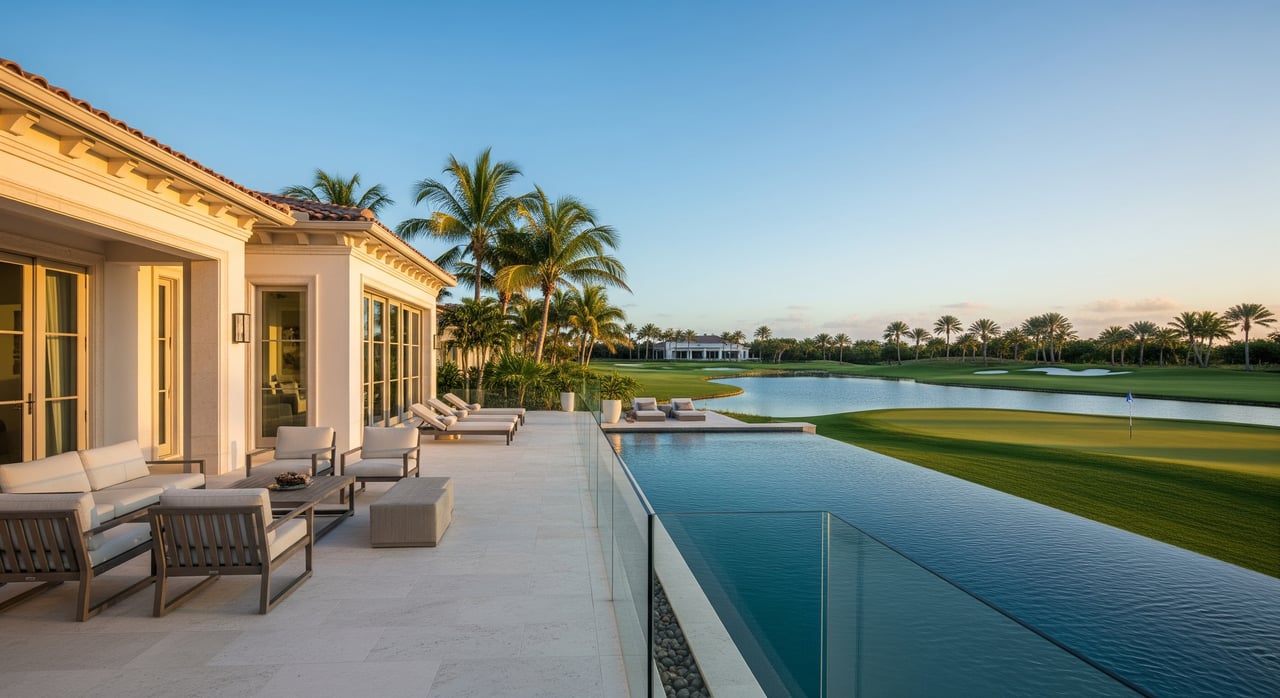
What Drives Golf-Front Premiums In North Palm Beach
Is that green view out your back door worth a premium? In North Palm Beach, it often is, but the size of that premium depends on more than just a pretty fairway. If you are weighing a sale or considering a purchase, you want clarity on what truly moves value in this market.
This guide breaks down the local drivers behind golf-front pricing, how to quantify the premium with real comps, and the risks that can shrink it. You will also get practical checklists for due diligence and negotiation. Let’s dive in.
North Palm Beach sits within a cluster of coastal and golf-course neighborhoods, with easy access to beaches, the Intracoastal, and nearby hubs like Palm Beach Gardens and Jupiter. Local courses and private club life shape demand, and high seasonal interest from second-home buyers often amplifies amenity premiums.
Nearby, high-profile facilities such as PGA National in Palm Beach Gardens help anchor regional golf demand. Whether the course by your property is private or municipal matters, because it changes access, exclusivity, and lifestyle value.
Open, unobstructed views of manicured fairways, water features, and mature trees can command a meaningful premium. Wide fairway or lake vistas tend to outperform views of maintenance areas or back-of-house operations. The orientation of your yard and how the green frames your living spaces matter.
Homes that include deeded or preferential access to a private club often sell for more than homes that only face the course. Bundled playing privileges, dining, pools, and social amenities add lifestyle value that buyers will pay to secure. If access is separate or not available, the premium is usually lower.
Golf-front lots are limited, and scarcity fuels competition. Lot depth, backyard orientation to the green, privacy buffers, and whether you back a fairway or a tee box all influence desirability. Subtle site details can swing value.
A well-maintained, high-quality course supports stronger premiums. Design features such as water hazards and memorable holes enhance views and appeal. Deferred maintenance or a tired brand can dampen demand.
This market includes active golfers, retirees, and second-home buyers who value club life. When that buyer pool is active, the premium tends to expand. If demand skews to buyers prioritizing other amenities over golf, the premium can narrow.
Golf-front settings feel open and serene for many buyers. Others weigh the potential for errant balls, cart-path traffic, and event activity. Where your home sits in relation to tees, greens, and paths changes the risk and the price you can ask.
Pools, tennis, fitness, marinas, and strong clubhouse facilities can increase overall appeal when paired with golf. At the same time, abundant nearby recreational options can shift buyer priorities and dilute the golf premium if the view or access is average.
In a tight seller’s market with limited golf-front inventory, premiums often expand as buyers compete. In softer conditions, the spread tends to contract. Seasonality also plays a role in South Florida.
Across markets, studies often cite a wide range. A common pattern is a single-digit to low double-digit premium when you compare golf-front or golf-view homes to similar non-golf properties. Think roughly 5 to 15 percent as a directional range, then verify locally.
In high-demand coastal areas like Palm Beach County, the upper end of that range can be realistic for top-located, private-club homes with strong views. The only reliable way to price is to analyze neighborhood-level comparables and control for size, age, lot, condition, pool, and timing.
Qualitative market signals help too. Shorter days on market and stronger list-to-sale ratios for golf-front homes point to a real premium. If golf-front listings linger or show heavy price cuts, expect a narrower spread.
Use a disciplined approach so you do not over- or under-price:
If a course closes or is slated for redevelopment, golf-front value can fall. Keep tabs on ownership, financial health, and any public plans or proposals. Historical premiums do not guarantee future value if the land use changes.
Some buyers discount homes near heavy greenskeeping. Questions about pesticide or fertilizer use and runoff near water features may affect willingness to pay.
Homes near tees or greens face higher odds of ball strikes. Mitigation like impact glass, screens, or netting adds cost. Factor in potential insurance considerations tied to repeated damage.
Verify cart-path easements, maintenance responsibilities, and the true property boundary. Limited control over the rear yard or unfavorable easements can reduce appeal.
Club events, cart traffic, and pedestrian activity along property edges can affect day-to-day enjoyment. Observing the setting during active play is smart due diligence.
Palm Beach County homeowners face hurricane and flood exposure. If a golf-front property sits near course lakes or in a special flood hazard area, expect higher insurance costs. Confirm flood zone designations and current premiums during diligence.
If buyer preferences move away from golf-centric lifestyles, premiums can compress. Track demand patterns in your micro-market.
In North Palm Beach and surrounding golf-course micro-markets, pricing accuracy depends on neighborhood mastery and a trained eye for property condition. As a family-operated boutique established in 1975, Reback Realty pairs deep local insight with hands-on construction and development expertise to help you assess view quality, lot orientation, renovation options, and membership structures with confidence.
If you are planning a sale, want a precise valuation range, or need discreet buyer representation, we are ready to help. Reach out to Reback Realty to Request a Confidential Home Valuation.
Stay up to date on the latest real estate trends.
We pride ourselves on informing and educating our clients in order to make better real estate decisions. Contact us today to find out how we can be of assistance to you!
Reback Realty
11420 US HIGHWAY 1 PMB 122 NORTH PALM BEACH FL 33408