
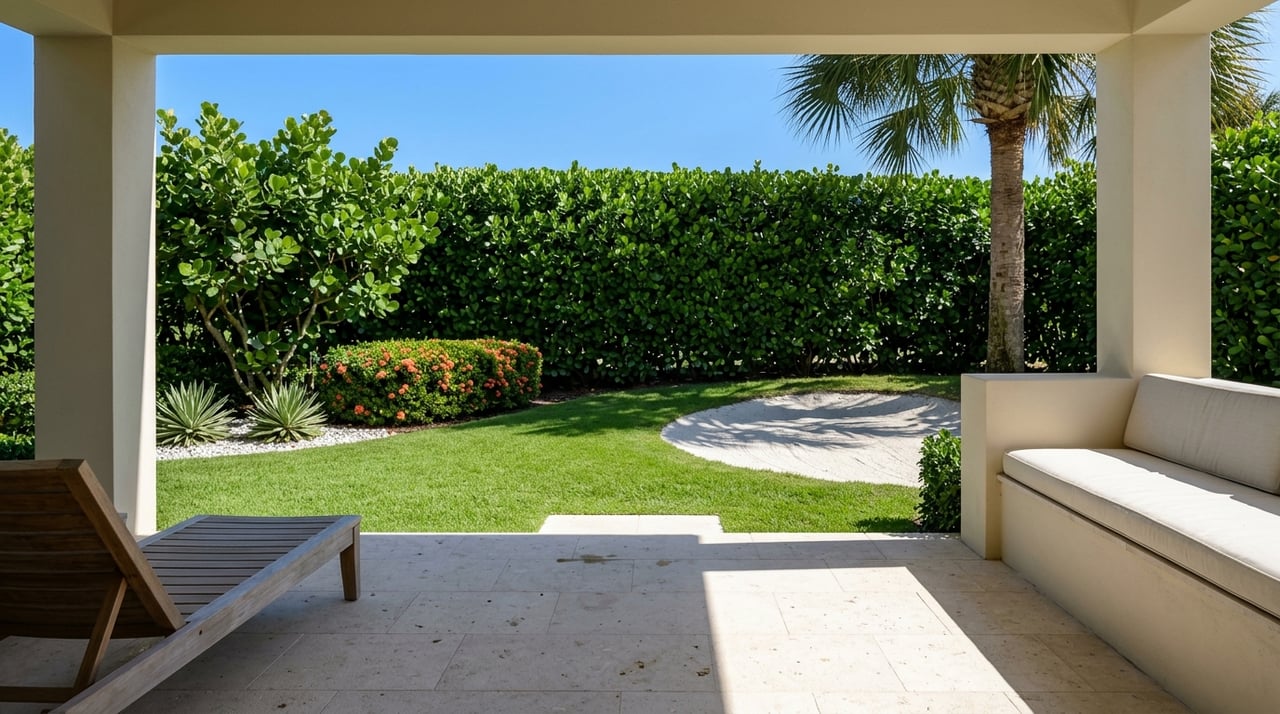
Lost Tree Village Property Types and Lifestyle Differences
What does “living in Lost Tree Village” really mean when no two properties feel quite the same? If you are exploring this private Palm Beach County enclave, it helps to know that the lifestyle can shift meaningfully from one setting to another. This guide will help you understand how Lost Tree Village works as one community with several distinct property lifestyles, so you can better match your goals to the right kind of ownership. Let’s dive in.
Lost Tree Village is best understood as a single private enclave with several micro-lifestyles inside it. The community describes a 450-acre gated setting between the Atlantic Ocean and the Intracoastal Waterway with 524 residences, inland lakes, private docks, a golf course, and ocean beaches.
That larger setting matters because every pocket shares access to the same broader community identity. Lost Tree Village also references fine dining, social gatherings, clay tennis courts, and a fitness center alongside its golf and beach environment.
The property owners association adds another layer to the picture. It emphasizes quiet sophistication, a limited population, exclusivity, and a balance of privacy and community spirit.
In many communities, home style drives the experience more than location within the gates. In Lost Tree Village, the opposite is often true.
Your daily rhythm may feel very different depending on whether you are looking at golf-front, lakefront, oceanfront, Intracoastal-oriented, or condo options. The home itself matters, but the surrounding orientation often shapes how you spend your time, what views define the property, and how much maintenance or long-term planning may come with ownership.
Golf-front homes tend to feel the most connected to the club-centered side of Lost Tree Village. Based on representative listings and the community’s broader golf identity, this setting often places the course at the center of the visual experience and daily routine.
For many buyers, that means the appeal is not just the fairway view. It is also the sense of proximity to the clubhouse and the overall rhythm of a golf-oriented lifestyle.
One representative golf-course home in the community shows a pattern that appears common in this pocket: updating in place rather than starting over on a completely new site. The example includes an expanded kitchen, expanded dining room, and refreshed interior and exterior treatment on a home originally built in 1978.
That suggests an important practical takeaway. In golf-front locations, the lot orientation and club access often remain highly desirable even as the house itself is modernized over time.
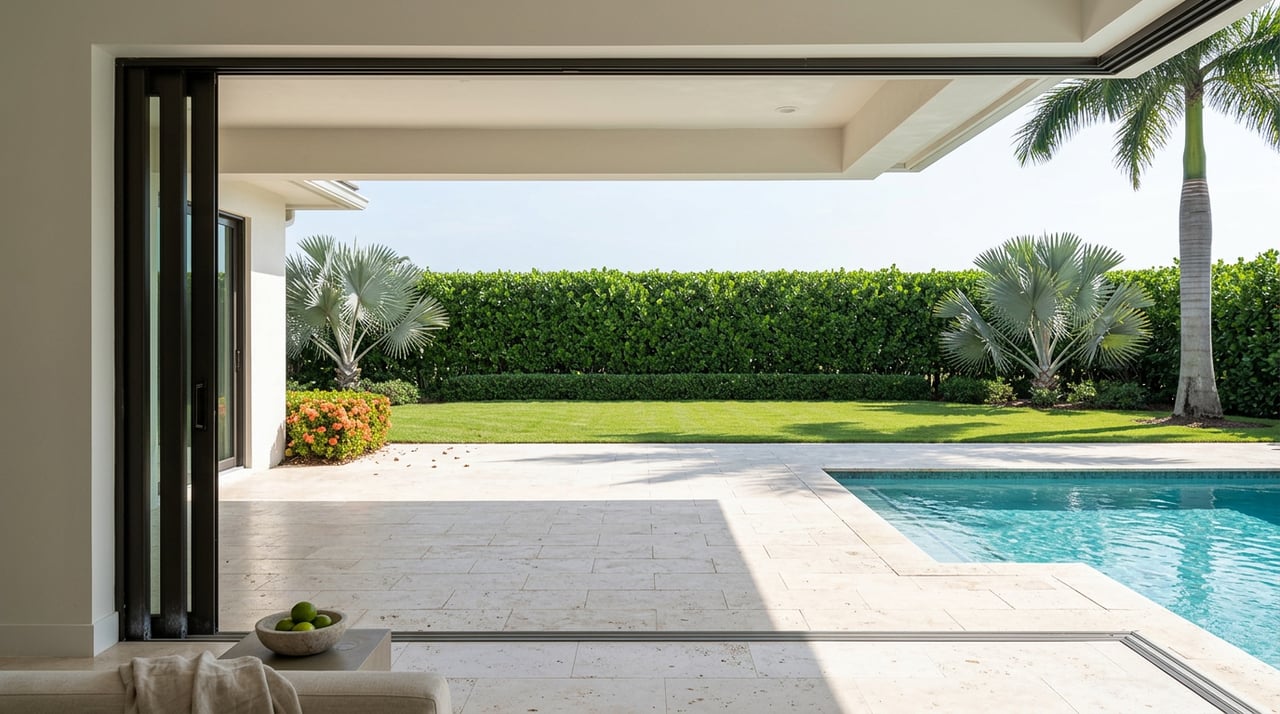
Lakefront homes offer a different kind of water setting. Representative listings describe properties with lake frontage, substantial waterfront dimensions, private pools, and access to the broader club amenities.
Within the Lost Tree Village framework, lakefront tends to read as a quieter and more buffered water choice. It often balances water views with a more inward-facing feel than open-ocean frontage.
Lakefront inventory appears to span multiple eras. Current records cited in the research include examples from 1971, 1987, 1990, and even 2022.
That age range tells you something useful as a buyer or seller. Lakefront ownership here is not tied to one single architectural moment, and the category appears to include a mix of older homes, updated residences, and newer replacement construction.
If your priority is direct access to the sand and wide Atlantic views, the oceanfront edge stands apart. A representative Greathouse condo is described as direct oceanfront, with ocean views from almost every room, direct beach access, and close proximity to the Lost Tree Beach Club.
Palm Beach County also identifies Lost Tree Village as one of the county’s residentially developed coastal communities. County records note that five parcels toward the community’s southern end abut the Atlantic Ocean.
Oceanfront ownership can offer the most immersive beach lifestyle in Lost Tree Village, but it also comes with more exposure to coastal conditions. Palm Beach County staff discussion points to older coastal multifamily properties being shaped by changing building codes, flood standards, erosion concerns, and setback rules.
That does not reduce the appeal of oceanfront living. It simply means that long-term ownership may involve more resilience planning, renovation discussion, or redevelopment considerations than you might expect in other parts of the community.
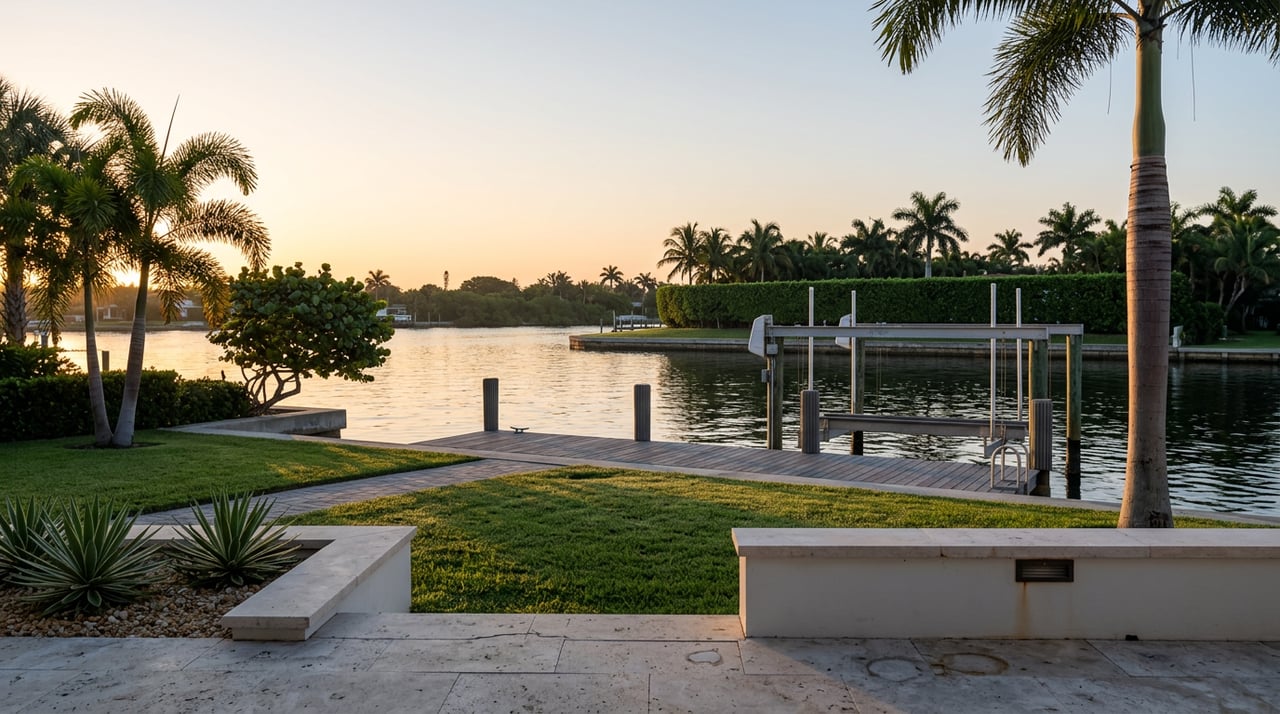
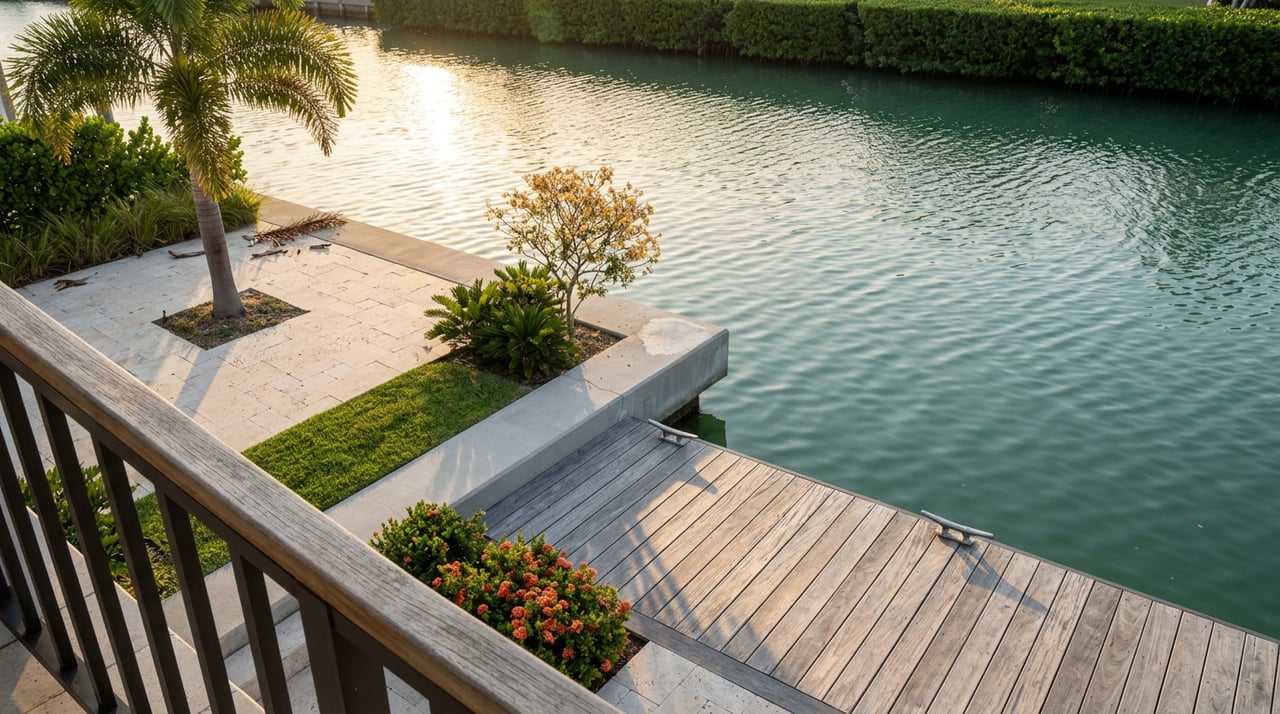
For buyers who prioritize time on the water, the Intracoastal-oriented pocket is often the most boating-focused setting. Representative listings describe Intracoastal frontage, ocean access, private docks, lifts, and significant boat frontage.
This is the pocket where the day may revolve around launching a boat, watching changing light on the water, and using the dock as part of everyday life. In lifestyle terms, it is one of the most function-driven property types inside Lost Tree Village.
The dock-oriented story is not limited to larger single-family homes. Supplemental condo context shows that some lower-maintenance inventory can still retain an Intracoastal Waterway or bay setting, along with features such as a community pool.
That distinction matters if you want water access without taking on the full scope of exterior property upkeep that often comes with a larger waterfront residence.
Lost Tree Village includes several condo projects within the broader community. Palm Beach County plat records list Lost Tree Club Condo Old Port Village, Lost Tree Condo Cottages, and Lost Tree Village Greathouse Condo.
For many buyers, condos offer the easiest way to enjoy Lost Tree location and community access while reducing yard work and exterior maintenance. That can be especially appealing for seasonal use or for buyers who prefer a simpler ownership model.
The condo inventory here is not one-size-fits-all. Research cited in the report notes a 1972 condo or co-op at 1 Church Lane, a 1979 oceanfront Greathouse building, and a Condo Cottages project dating to 1965.
In practical terms, that means one condo may be tied to an oceanfront experience, another may sit nearer the club, and another may lean more toward an Intracoastal-adjacent cottage setting. The right fit depends on whether you value beach access, club proximity, water orientation, or ease of ownership most.
Lost Tree Village is mature enough that change usually comes through renovation, selective rebuilding, or condo turnover rather than large-scale new subdivision growth. The research shows a wide age spread across the community, from a 1965 condo cottage to a 2022 lakefront build.
That mix helps explain why the village can feel both established and current at the same time. You are often seeing decades of gradual reinvestment rather than one uniform wave of development.
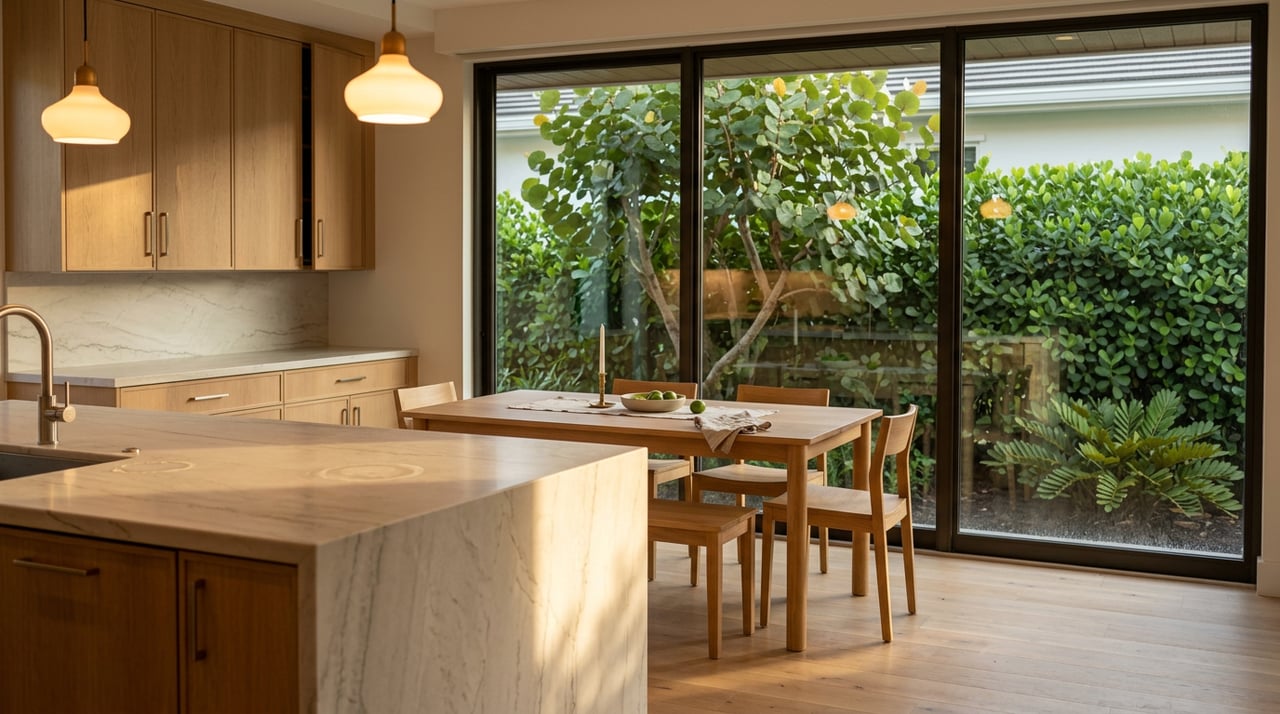
The way homes evolve often depends on the setting. Golf-front and lakefront properties more commonly appear to benefit from in-place upgrades such as expanded kitchens, refreshed interiors, terrace reworking, pool improvements, and landscape tuning.
On the oceanfront side, the planning conversation can be more complex because older coastal buildings may be affected by flood and code considerations over time. For buyers and sellers alike, this is where practical property analysis becomes especially important.
If you are comparing options in Lost Tree Village, start with lifestyle before square footage. A few questions can help narrow the fit:
Here is the simplest way to think about the main categories:
Because Lost Tree Village contains several property lifestyles inside one gated community, surface-level comparisons can be misleading. Two homes may share the same community name while offering very different ownership experiences, maintenance profiles, renovation paths, and day-to-day rhythms.
That is where hyper-local guidance matters. A boutique team with direct familiarity in Lost Tree Village can help you look beyond finish selections and square footage to assess setting, long-term flexibility, and how well a property aligns with the lifestyle you actually want.
Whether you are buying a dock-oriented waterfront home, evaluating an oceanfront condo, or preparing to sell a legacy property, a nuanced understanding of the community can make a meaningful difference. If you would like discreet, local guidance on Lost Tree Village real estate, connect with Reback Realty.
Stay up to date on the latest real estate trends.
We pride ourselves on informing and educating our clients in order to make better real estate decisions. Contact us today to find out how we can be of assistance to you!
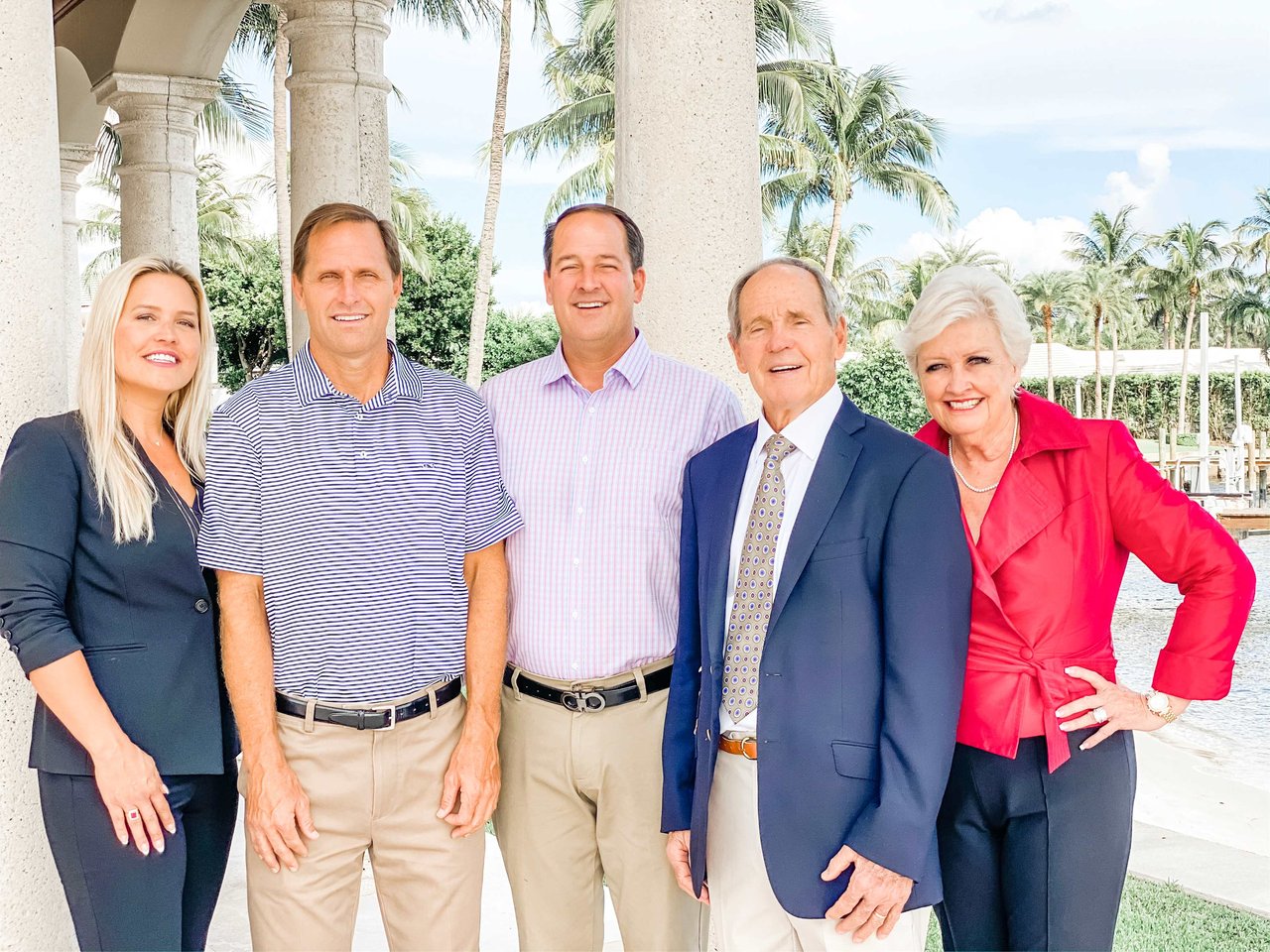
Reback Realty
11420 US HIGHWAY 1 PMB 122 NORTH PALM BEACH FL 33408