
Your Guide to Juno Beach Sea Turtle Nesting Season
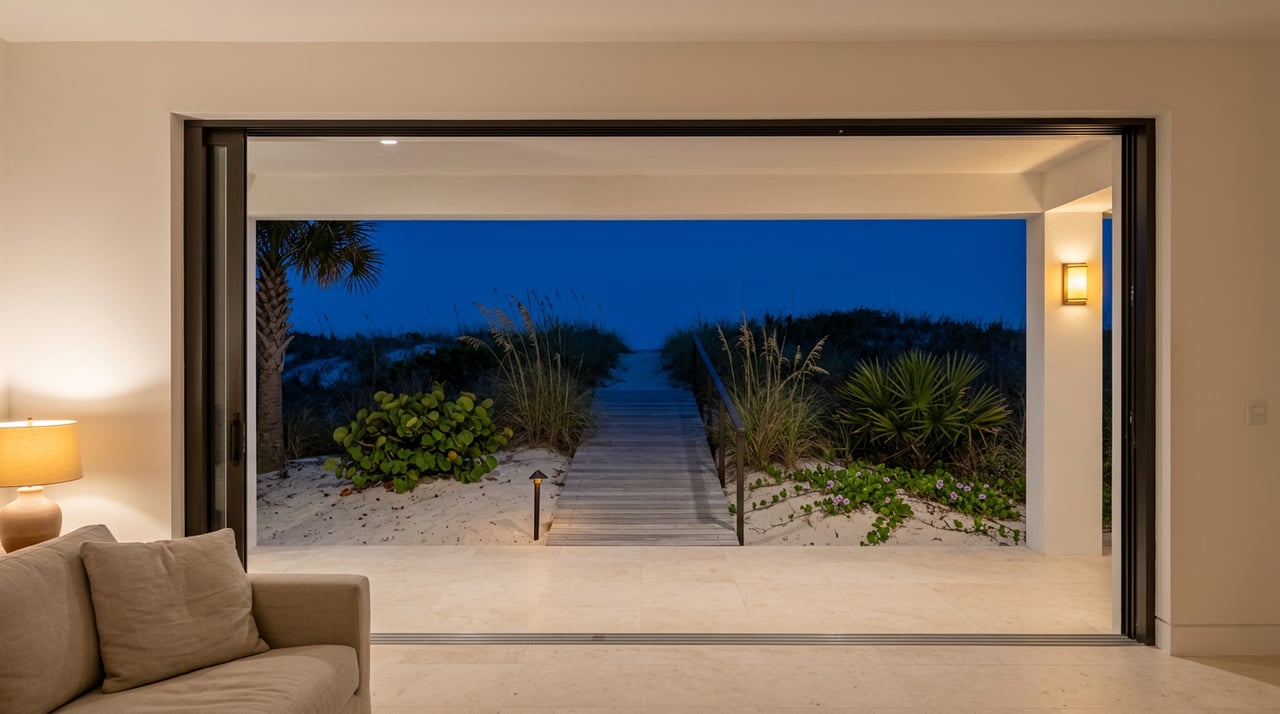
The porch lights go amber. The shades come down before the sun does. Somewhere between the Juno Beach Pier and the north end of Loggerhead Park, a female loggerhead is hauling herself up the slope you walked barefoot at lunch, digging a chamber the depth of her flipper, and laying a clutch you will never see. This is the month the beach belongs to someone else, and the neighborhood knows it.
If you have lived here more than a season, you already know the rhythm. What you may not know is how much has shifted in 2026, and how much of the summer's best programming still has open seats between now and October. The argument of this post is simple: this year's nesting cycle is the busiest, earliest, and most tightly monitored one Juno Beach has seen, and the residents getting the most out of August are the ones treating the beach after dark as a scheduled event rather than a spontaneous walk.
On February 11, 2026, Loggerhead Marinelife Center documented the earliest sea turtle nest ever recorded in its monitoring history, roughly three weeks ahead of the season's official March 1 start. Justin Perrault, LMC's Vice President of Research, tied the timing to rising ocean temperatures. The practical read for anyone living between US-1 and A1A: hatchling emergence started earlier, which means August activity on the sand is running hotter than a typical mid-summer, and the tail of the season stretches through October 31.
The baseline matters. In 2025, LMC recorded 20,871 nests from leatherbacks, loggerheads, and green turtles. That is the volume the local beach is capable of holding across a single season on the stretch LMC monitors. It is not a national statistic borrowed from a federal agency. It is your beach.
Two more shifts residents should register:
And an oddity worth knowing at a neighborhood cocktail party: LMC documented the first-ever Olive Ridley sea turtle nest in Florida in May 2026. That species is not supposed to be here. It was, on your sand.
The Turtle Walks book out. So do the hatchling programs. LMC opens registration in tranches, and the seats that remain in August tend to disappear within a day or two of release. Seasonal experiences run through September and include guided Turtle Walks, the Hatchling Discovery Program, Hatchling Releases, Tidal Tots, and Plastic Free July Community Action Day.
Here is how they differ in practice:
| Program | What you actually see | Best for |
|---|---|---|
| Turtle Walk | The nesting process, with instruction on sea turtle biology, conservation, and ongoing research | Households wanting the full ritual, from ridge scan to egg drop |
| Hatchling Discovery | Post-emergence nest inventory, egg shell counts, occasional live stragglers | Families with kids old enough to sit still after 8 p.m. |
| Hatchling Releases | Small, curated releases of rehabilitated hatchlings | Guests you want to impress without booking a boat |
| Tidal Tots | Shore-side conservation programming for the youngest set | Grandkids in town for a weekend |
Educational demonstrations may include red-light headlamps, amber lighting, night scopes, and research tag scanning equipment. If someone in your house has never seen a research team work a beach at 10 p.m., that alone is worth the reservation.
"This nesting season, we're leading several research projects involving satellite tagging, nest temperatures, foraging and fasting behavior, toxicology, and dive information in relation to the STPZ." — Justin Perrault, VP of Research, Loggerhead Marinelife Center
For residents who prefer daytime, the Center itself remains free. It was named the No. 1 "Best Free Attraction" in USA Today's 10Best Readers' Choice Awards back-to-back for 2024 and 2025. Bring out-of-town guests midweek before 11 a.m. and you will beat both the school groups and the parking crunch.
The etiquette pieces read as small until you understand that a hatchling disoriented by a single upstairs bathroom window can crawl inland instead of seaward and never make the water. LMC's guidance for beachgoers and residents through nesting season includes keeping distance from nesting turtles, remaining quiet with all lights off including flash photography and cellphones, allowing hatchlings to reach the ocean on their own, using designated beach access points rather than walking on dunes, keeping home lights off while not in use and blinds closed at night to reduce sky glow, and removing chairs, tables, umbrellas, and water sport equipment before dark.
Two additions homeowners east of US-1 should think about now rather than in October:
If a nest ends up marked in front of your property, the stakes are the beach's, not yours. Touching, prodding, or shining lights is illegal and may cause nesting turtles to not lay eggs or disturb them, which can affect how well the nests are covered and camouflaged.
The Turtle Walks generally step off after full dark. That leaves a two-to-three hour dinner window that most residents underuse, either because they eat too early or because they treat A1A and US-1 like they are the same corridor. They are not. Here is how the neighborhood actually stacks up in August.
The Fish House at Juno Beach reads casual, beachy, and lively, with an island vibe of palm trees and patio twinkle lights, a bustling bar scene, and a covered outdoor area that tends to be quieter than the interior. Lobster specials run on Tuesdays and Thursdays, which is the night to make the reservation if you have never had a whole Maine lobster before a Turtle Walk. The patio empties out around 8 p.m., which is exactly when you want to be walking north toward the pier.
Nick & Johnny's Osteria began hosting monthly wine tastings in April 2026, with sommelier Michael Bower guiding the pairings, and continues its doo-wop dinner shows from October through early May. August is the quiet stretch on their calendar, which is a feature rather than a bug when you want a two-hour table without a wait.
The largest neighborhood story of the year is not a nest. Big Mamma Group, the Paris-born collective behind Pink Mamma, Gloria Osteria, and Carlotta, is opening its first U.S. restaurant in Juno Beach in late 2026, and the address sits inside the new Caretta condo and retail building off of US-1. The launch is being grounded through partnership with Carmine's Gourmet Market & La Trattoria, the Palm Beach Gardens institution founded by Italian-born Carmine Giardini in 1988. The reason it matters for a resident tonight is that Caretta's ground-floor lights are already changing what the west side of US-1 looks like after dark. If you have not walked past it recently, do.
For the record, AquaSan opened as Juno Beach's newest Asian-inspired dining experience, in a stylish, relaxed space filled with lush greenery. It slots naturally into the same corridor.
Juno Beach may be known for its tranquil shores and natural beauty, but the Juno Beach Café serves breakfast or brunch just steps from the sand, and Hurricane Café runs a menu from comfort food to lighter options. A Hatchling Discovery program that runs until 10 p.m. earns a slow Sunday at either.
Do that three times between now and the end of September and you will understand your own street better than the seasonal renters ever will.
The strongest reason to still be here in August is not the weather. It is the fact that a single stretch of coastline holds a research operation of national significance, a summer program calendar built for residents, and a corridor of restaurants that is quietly becoming one of the more interesting eating stretches in Palm Beach County. Owning here means owning a share of that.
If you would like to talk about how the changes along US-1 and the Caretta corridor are shaping value on the streets between the beach and the Intracoastal, Reback Realty has been watching this specific stretch of coast for fifty years. Request a Confidential Home Valuation when you are ready for a private conversation about what your property is worth in the market that is taking shape right now.
Stay up to date on the latest real estate trends.
We pride ourselves on informing and educating our clients in order to make better real estate decisions. Contact us today to find out how we can be of assistance to you!
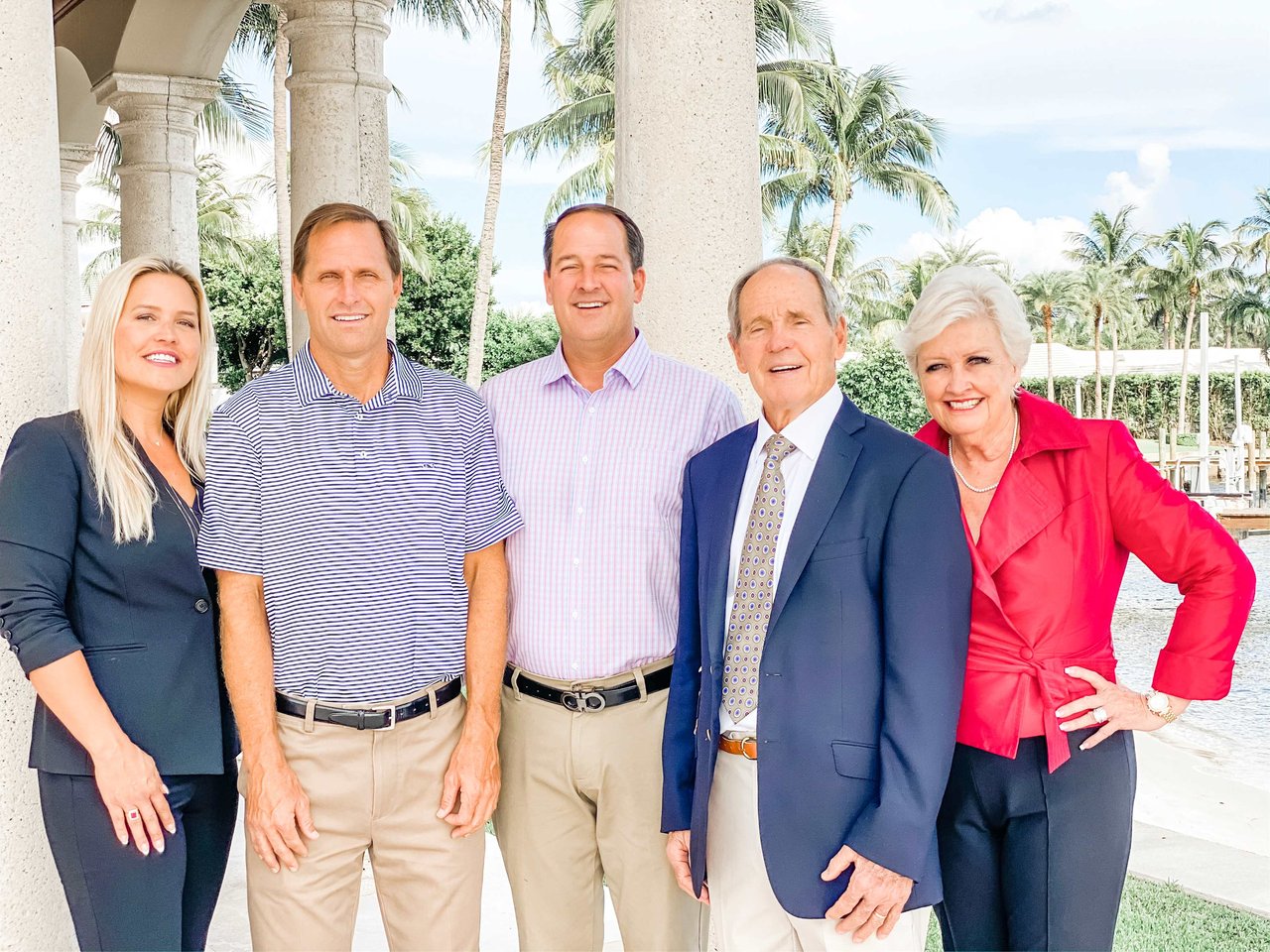
Reback Realty
11420 US HIGHWAY 1 PMB 122 NORTH PALM BEACH FL 33408