
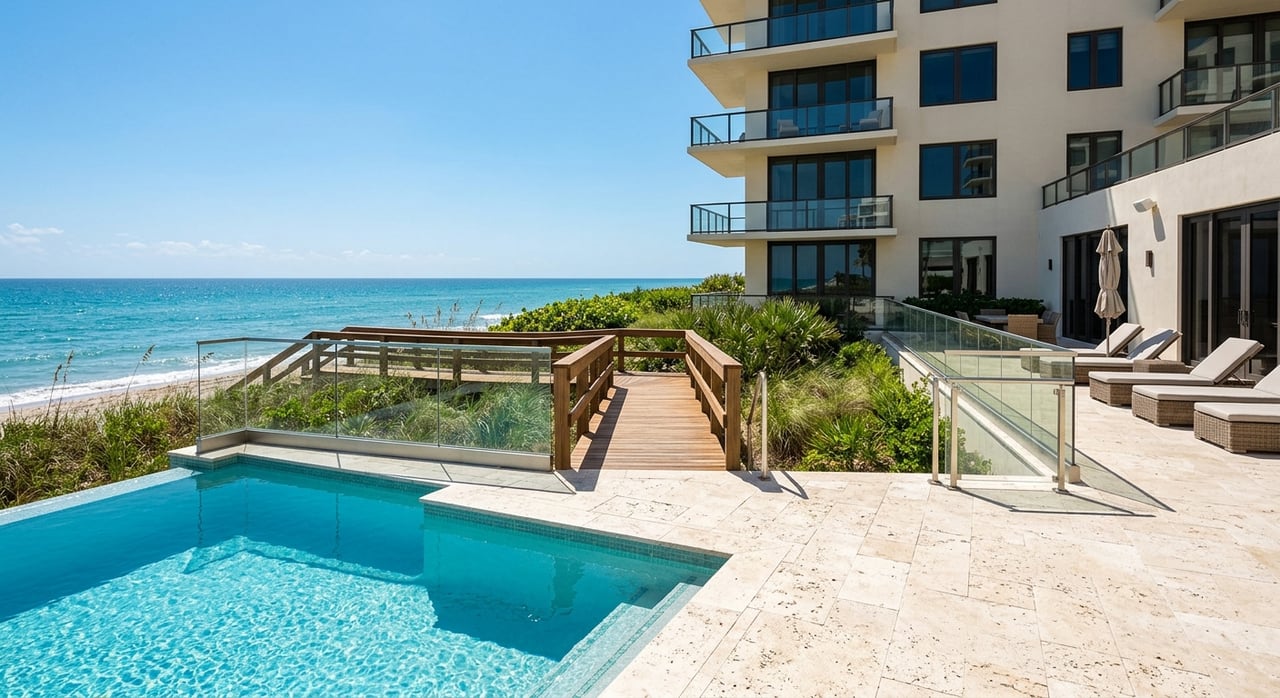
Buying An Oceanfront Condo In Juno Beach
If you are thinking about buying an oceanfront condo in Juno Beach, the view is only the beginning. This small seaside town offers a very different condo experience depending on the building, the beach access, and the association behind it. If you want to make a smart purchase with fewer surprises, it helps to know what to look for before you fall in love with the horizon. Let’s dive in.
Juno Beach is a predominantly residential seaside town with oceanfront estates, condominiums, and an oceanfront bike path. Its condo inventory developed over several decades, with the first condominium arriving in 1966 and additional construction along Ocean Drive expanding in the 1970s. That means you are not shopping one uniform product type.
Instead, you will find a mix of older concrete buildings, later full-service towers, and even boutique low-density properties. For many buyers, especially seasonal and second-home buyers, that variety is a major advantage. It also means you need to compare more than square footage and view.
One of the biggest factors in Juno Beach is building age. Many oceanfront condos date to the 1970s, while others were built in the 1990s or 2000s. That difference can affect layout, amenity package, monthly fees, reserve funding, and future maintenance needs.
Older 1970s-era buildings often offer a simpler ownership experience. Current examples in the market show features like modest common areas, lower-rise structures, and fewer staffed amenities. In some cases, monthly HOA costs can be lower than what you would see in a full-service luxury tower.
Newer towers tend to offer a different lifestyle. Buildings from the 1990s and 2000s may include concierge service, 24/7 security, fitness centers, clubrooms, spas, garages, storage, and more robust common-area services. Those features can be appealing if you want a lock-and-leave second home, but they often come with significantly higher association fees.
Older oceanfront condos in Juno Beach may appeal to buyers who want a more straightforward property with fewer extras. Some examples show amenities limited to basics such as a pool or shuffleboard, which can keep operations simpler. That can be attractive if your priority is beach access and view rather than a long amenity list.
At the same time, age matters. An older building may require more attention to structural maintenance, waterproofing, windows, balconies, and reserves. A lower monthly fee is not always the same thing as a lower long-term ownership cost.
In contrast, newer buildings can deliver a more full-service experience. Ocean Royale, for example, is a 2000-built, 13-story building with concierge, 24/7 security, a theater room, clubroom, fitness center, and spa. That profile fits buyers who want convenience, staffing, and a more resort-style feel.
The tradeoff is cost. Current examples in Juno Beach show HOA fees ranging from a few hundred dollars a month in simpler buildings to more than $3,000 a month in a full-service tower. Those dues reflect more than luxury branding. They are tied to staffing, insurance, amenities, maintenance demands, and reserve funding.
Not every buyer wants a tower. Juno Beach also has boutique, low-density condo options, including examples with just a handful of residences. If you value a quieter setting, fewer shared spaces, and a more private feel, that type of building may be worth a closer look.
With smaller buildings, though, each owner’s share of maintenance can matter more. Fewer units can mean a more intimate environment, but it can also mean less room to spread major repair costs across many owners.
A common mistake is assuming every oceanfront address offers the same use experience. In Juno Beach, the exact stack, line, and building position can materially affect privacy, view, and beach access. Two units on the same street can feel very different in daily life.
Some current examples are directly on the sand, while others are simply closer to the ocean within a larger building arrangement. That is why you should look beyond the address and confirm the unit’s actual relationship to the beach. The difference can affect both value and enjoyment.
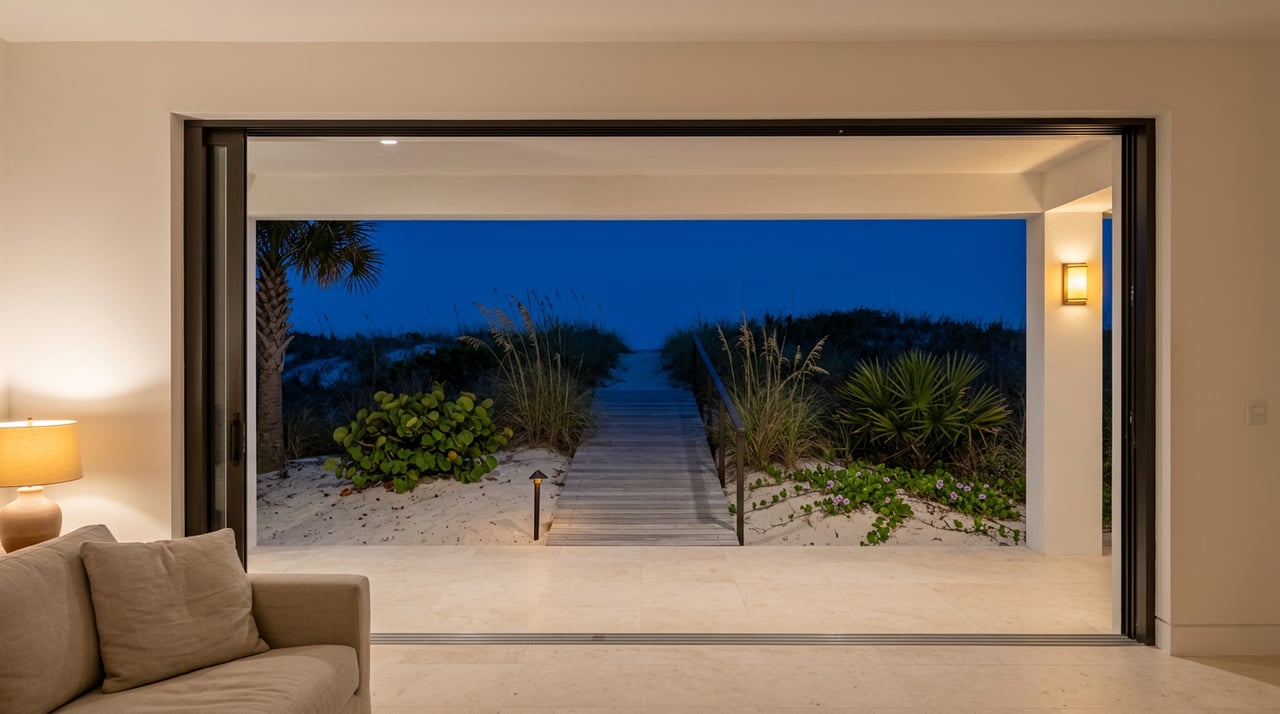
When comparing condos, ask how you physically reach the beach. Some properties may have direct sand frontage, while others may use a shared or deeded walkover. Others may offer proximity and views without true direct frontage.
That distinction matters if you plan to spend a lot of time on the beach or host visiting family and friends. Easy access can shape your daily routine just as much as the floor plan.
Beach living is not only about what you see from the balcony. It is also about how easily you and your guests can arrive, park, and move through the property. If you expect frequent visitors or seasonal stays, these practical details deserve attention during your search.
Juno Beach is compact and residential in character. Juno Beach Park offers 300 feet of guarded beach frontage, a 990-foot pier, parking, restrooms, outdoor showers, picnic shelters, designated surfing space, and fishing from the pier. The town also features an oceanfront bike path that supports an easy coastal routine.
For many buyers, that setting feels more relaxed and less built-up than other nearby coastal options. Juno often reads as a lower-rise, more residential choice when compared with taller condo markets nearby.
Jupiter’s official beach information points to a more beach-park and access-point oriented setup, with about 3.4 miles of beaches, multiple public and private crossovers, ADA-accessible points, a dog-friendly stretch, and free parking at several beach parks. That creates a different experience from compact Juno Beach.
If you prefer a quieter beach town atmosphere centered on residential oceanfront living, Juno may feel like the better fit. If broad public access options and multiple beach-park choices matter more to you, Jupiter may be worth comparing.
Current nearby examples on Singer Island show a taller, more tower-driven market, including 19-story and 24-story buildings. Compared with that profile, Juno generally feels lower-rise and more residential. That can be especially appealing if you want a coastal setting that feels more understated.
In Florida, condo association documents are not just paperwork. They are a major part of your buying decision, especially in an oceanfront building. Before waiving contingencies, you should review the governing documents and financial materials carefully.
Under current Florida condominium requirements, buyers are entitled to key records such as the declaration, articles of incorporation, bylaws, rules, annual financial statement, and budget. If applicable, buyers are also entitled to the milestone inspection summary and the most recent structural integrity reserve study.
Association fees can include far more than pool maintenance. Current examples show that condo dues may bundle items such as insurance, internet, cable TV, water, sewer, trash, elevator service, roof repairs, and maintenance of the structure and grounds.
That is why a lower fee should not be viewed in isolation. You should ask what is included, whether reserves are fully funded, and whether any special assessment is pending.
Rules can affect how well a condo fits your lifestyle. Some current Juno Beach examples show differences in pet policies, with one building allowing pets and another not allowing them. If you are buying a second home, you should also confirm lease restrictions and approval requirements.
A beautiful unit can still be the wrong fit if the association’s rules do not match how you plan to use the property.
For residential condominium buildings that are three stories or higher, Florida law requires milestone inspections by the year the building turns 30 and every 10 years after that. Structural integrity reserve studies are also required every 10 years after the condominium’s creation for key building components such as the roof, load-bearing structure, fire protection systems, plumbing, electrical systems, waterproofing and exterior painting, and windows and exterior doors.
For a buyer in Juno Beach, these requirements matter because much of the oceanfront inventory spans different decades. A building’s reserve position, inspection history, and repair planning can directly affect both your risk and your monthly carrying cost.
Florida law also warns that waiving reserves can expose owners to unexpected special assessments. That makes it especially important to understand whether the association is budgeting realistically for long-term maintenance.
Buying on the ocean is not just a lifestyle decision. It is also a maintenance decision. Coastal conditions can be hard on buildings, and that reality should shape how you evaluate a condo.
Research on coastal adaptation and coastal construction points to ongoing risks such as erosion, flooding, storm surge inundation, saltwater intrusion, high winds, moisture, and salt-laden air. These conditions can damage masonry and other building materials over time.
When touring buildings, pay close attention to practical features and upkeep. Impact windows, waterproofing, balcony and roof maintenance, corrosion-resistant materials, and disciplined reserves all matter in a coastal building.
This is where construction-minded guidance can be especially valuable. In a market like Juno Beach, a polished lobby is nice, but the bigger question is how well the building has been maintained behind the scenes.
A stunning renovation inside the condo does not remove building-level risk. Even if the residence is beautifully updated, the association’s approach to structural maintenance, reserve planning, and major repairs still affects your ownership experience.
That is why the smartest buyers evaluate both the unit and the building as one package.
Before you move forward on an oceanfront condo in Juno Beach, keep this checklist handy:
Juno Beach can be an excellent fit if you want a more residential oceanfront setting with a mix of building styles, beach access options, and ownership experiences. The key is understanding that not all oceanfront condos here function the same way, even when they share the same road or similar views.
If you take time to compare building era, access, rules, reserves, and maintenance stewardship, you can buy with more clarity and confidence. And in a coastal market where long-term condition matters as much as location, experienced local guidance can make a meaningful difference.
If you are considering an oceanfront condo in Juno Beach and want discreet, local insight on buildings, values, and property condition, Reback Realty is here to help.
Stay up to date on the latest real estate trends.
We pride ourselves on informing and educating our clients in order to make better real estate decisions. Contact us today to find out how we can be of assistance to you!

Reback Realty
11420 US HIGHWAY 1 PMB 122 NORTH PALM BEACH FL 33408