
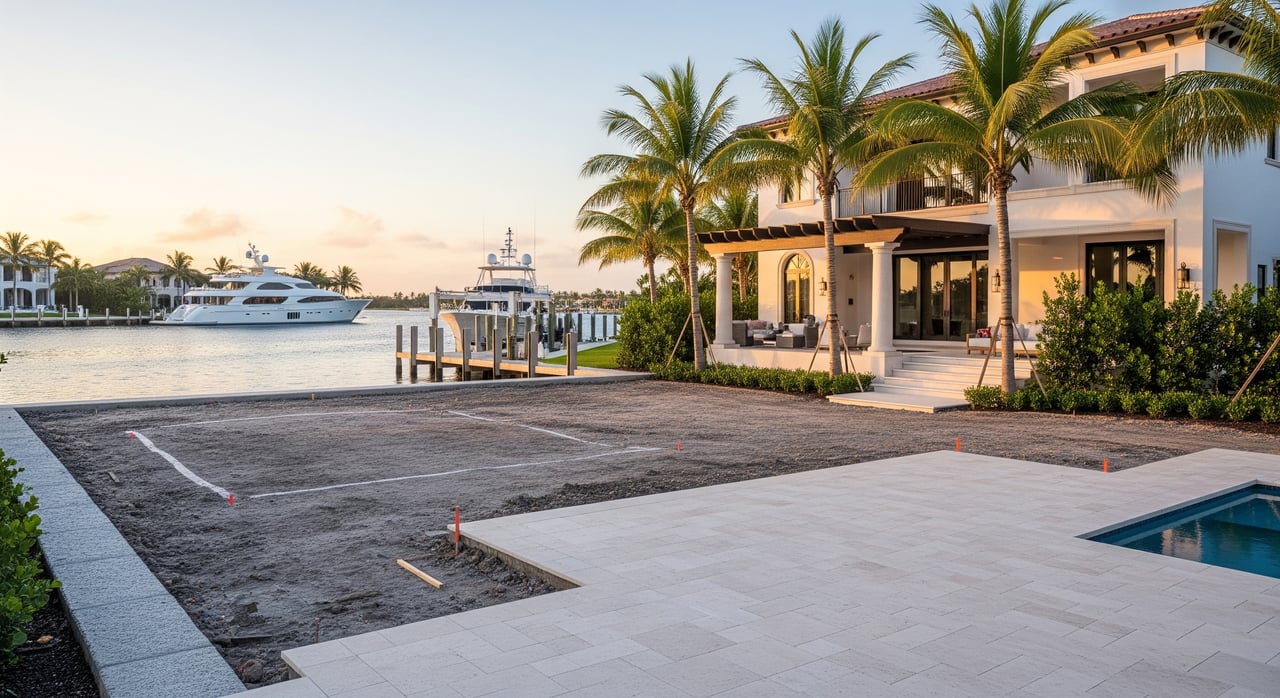
Build Vs. Buy In Palm Beach Gardens: A Luxury Buyer’s Math
Should you build a custom home or buy an existing luxury property in Palm Beach Gardens or Harbor Place? If you want the right answer, you need more than a gut feeling. You need clear math, a realistic timeline, and a sharp view of local rules and insurance realities.
You might crave a bespoke layout, but you also value convenience and certainty. Both paths can work in Palm Beach County’s high-demand coastal market. In this guide, you’ll learn how to compare total costs, understand timing and risk, and decide which route fits your lifestyle and long-term plans. Let’s dive in.
Luxury demand here is fueled by lifestyle amenities, limited supply of premium lots, and Florida’s favorable tax environment. Waterfront and estate parcels are especially scarce, which pushes land values higher and rewards well-located, turnkey product. In neighborhoods around Palm Beach Gardens, West Palm Beach, Boca Raton, and Delray Beach, you will see strong appetite for high-spec homes and renovated resales.
If you are eyeing Harbor Place or nearby micro-neighborhoods, assume an approval process for exterior changes and new construction. Community rules, HOA architectural review, and site constraints matter. The best approach is to compare options using real numbers for the exact lot or property you are considering.
To compare build vs buy, stack every dollar on both sides. Do not rely on price per square foot alone. Include land, hard and soft costs, and carrying costs through completion.
Custom luxury builds take longer than buying a move-in-ready home. Timelines vary widely with site complexity, permitting, builder capacity, and weather. Construction can stretch many months or more than a year for bespoke projects.
Delays do happen. Permitting backlogs, supply-chain issues, hurricanes or heavy rain, and change orders can extend schedules. During a build, you also carry interest on draws, property taxes on the lot, insurance, utilities, and the cost of your current housing. Put those numbers into your comparison because they can shift the break-even point.
Palm Beach County follows the Florida Building Code, with strong wind and flood standards. If your site sits in or near a mapped flood zone, foundation type and elevation are tied to floodplain rules that can affect design and cost. Waterfront or coastal-adjacent lots may require extra approvals and environmental reviews.
HOA Architectural Review Committees add steps for both exterior remodels and new builds. Their guidelines can shape rooflines, materials, setbacks, and landscape plans. These reviews support long-term quality but add time. Plan for submittals, revisions, and inspections.
In coastal markets, insurers focus on wind and flood exposure. Lenders typically require flood insurance if a property lies in a FEMA flood zone. Hurricane-hardening features such as impact-rated openings, reinforced connections, and generators raise upfront costs but can support better resilience and potential premium savings.
If you buy an existing home, budget for bringing key elements to current standards. If you build, design resiliency from the start. Either way, pricing insurance early helps you forecast annual holding costs and evaluate net ownership cost.
Construction financing usually comes as a short-term, interest-only loan with draws tied to milestones. Lenders underwrite the project, builder credentials, plans, budget, and the expected value at completion. Many buyers convert to a permanent mortgage at the end via a construction-to-perm structure.
Buying an existing luxury home typically involves a jumbo mortgage with different underwriting thresholds. Cash buyers in either path simplify the process, but you still have carrying costs and the opportunity cost of capital tied up during a build.
Location and lot quality drive luxury resale. A well-located resale home with solid systems and curb appeal can be more liquid than a custom build on a compromised site. Extremely personal design choices may narrow your future buyer pool.
On the other hand, a new build that aligns with broad market preferences in a prime location can command a premium. Consider how long you plan to hold the property. If you plan to keep it for many years, personalization may outweigh resale concerns. If you might sell within a few years, lean toward widely appealing design choices.
Use a simple structure to compare options in a consistent way:
This is not just a spreadsheet exercise. You should also weigh non-financial paybacks such as a custom layout, higher energy efficiency, and your tolerance for time and complexity.
Match your priorities to the path that fits best:
Before you choose, verify neighborhood rules and timing in Harbor Place or your target community. Ask about lot sizes, setbacks, view protections, and any construction restrictions. Confirm flood zone designation and elevation requirements for specific lots, plus any coastal or environmental approvals if water-adjacent.
Check recent comparable sales across Palm Beach Gardens and nearby cities to understand price per square foot and absorption. Your holding period and exit plan depend on real market liquidity, not just list prices.
Use a straightforward, professional process to reduce surprises:
You deserve advice grounded in both market data and build know-how. As a boutique, family-operated brokerage with deep Palm Beach County roots, we combine neighborhood mastery with practical construction insight. Our team advises on lot selection, feasibility, renovation scope, and resale considerations, drawing on in-house contracting and spec-build experience to help you make a clear-eyed choice.
Whether you decide to build or buy, we will help you structure offers, line up the right professionals, and keep your plan on track from first tour to final walkthrough.
Ready to run the numbers on your specific scenario and compare real options in Harbor Place and Palm Beach Gardens? Reach out to Reback Realty for confidential, tailored guidance.
Stay up to date on the latest real estate trends.
We pride ourselves on informing and educating our clients in order to make better real estate decisions. Contact us today to find out how we can be of assistance to you!
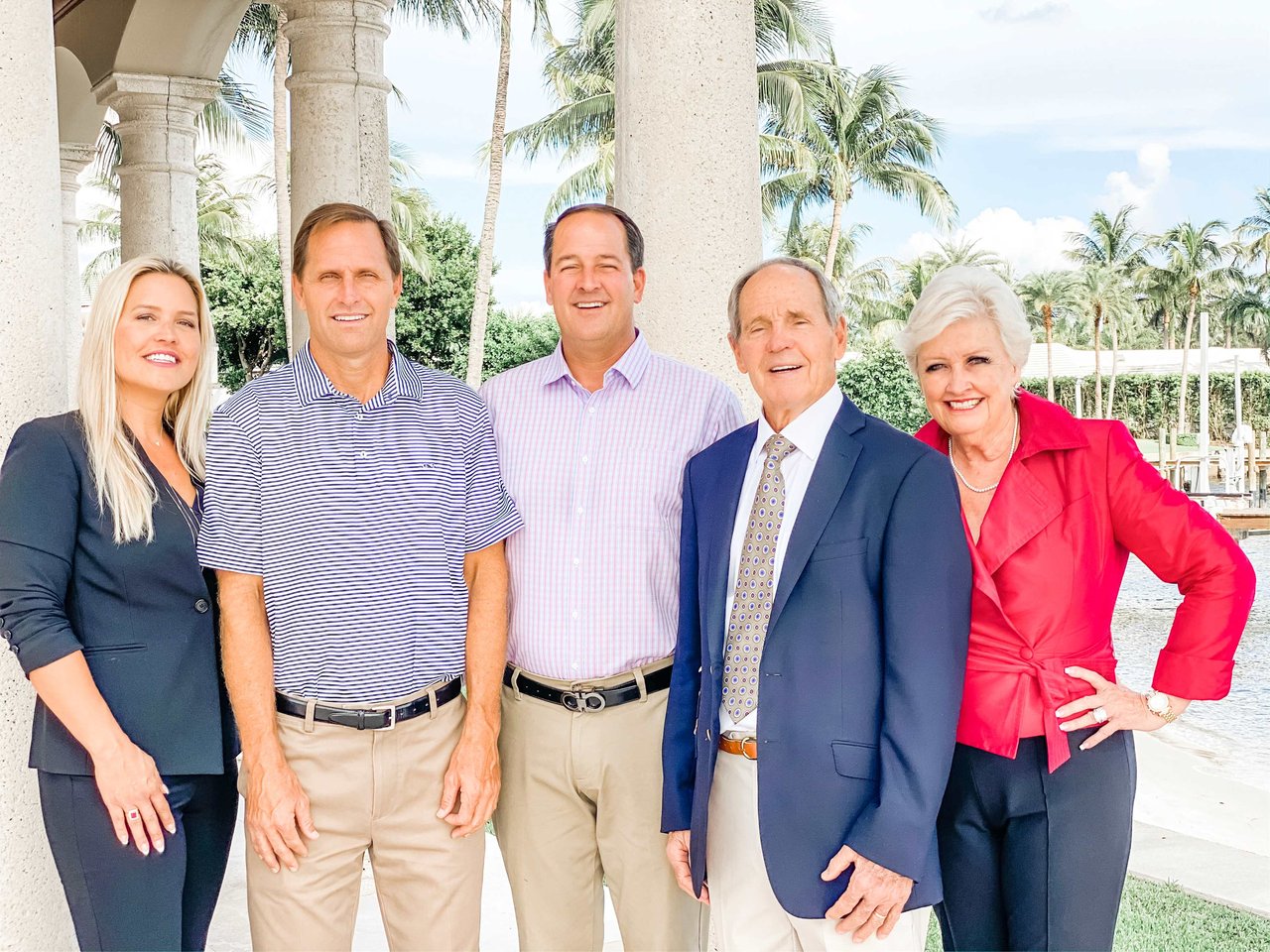
Reback Realty
11420 US HIGHWAY 1 PMB 122 NORTH PALM BEACH FL 33408