
In Harbor Place, the Hardest Number in Every Appraisal Is Seven
"Our Lifestyle Collection is like walking into a Ferragamo showroom and having something custom-made."
Todd Ullom, a principal at Couture Homes, said that about the process his firm used to build every house behind the gates on Palmwood Road. It is a good line for a builder's brochure. It is also, without anyone intending it, an accurate description of a problem that surfaces months after the brochure has been forgotten: what happens when a bank needs to put a number on a house that was built to have no equal.
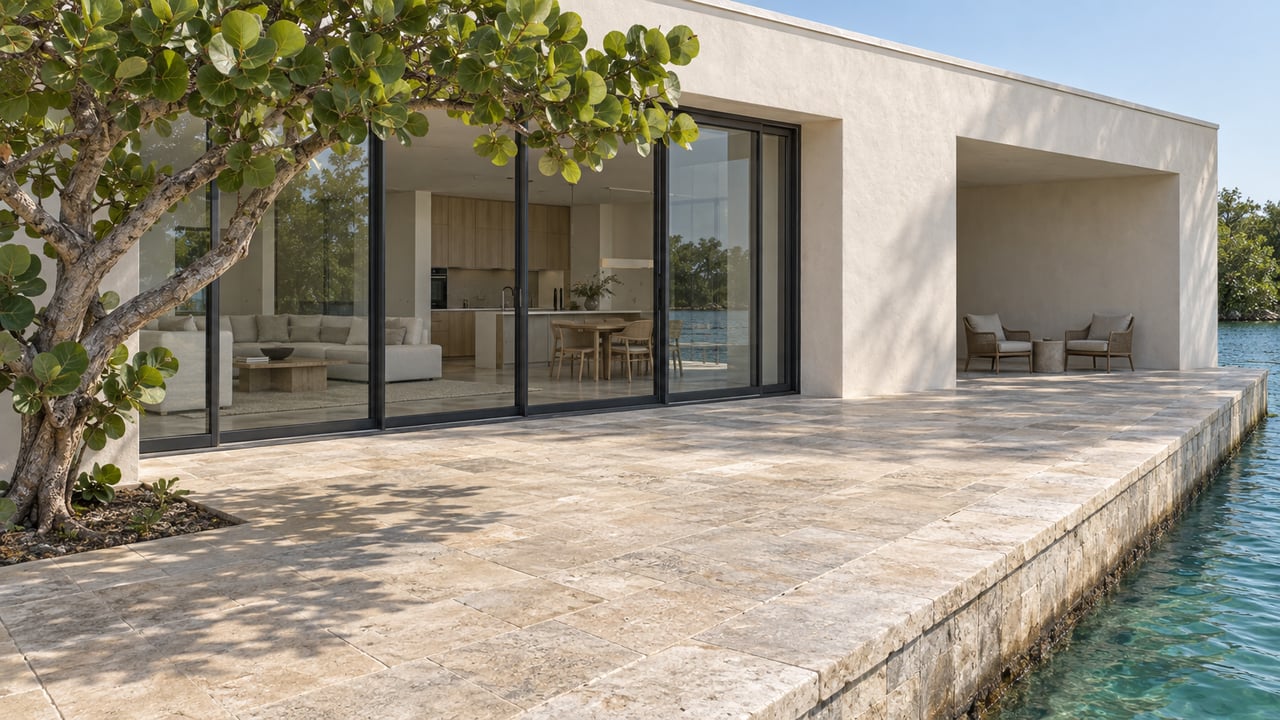
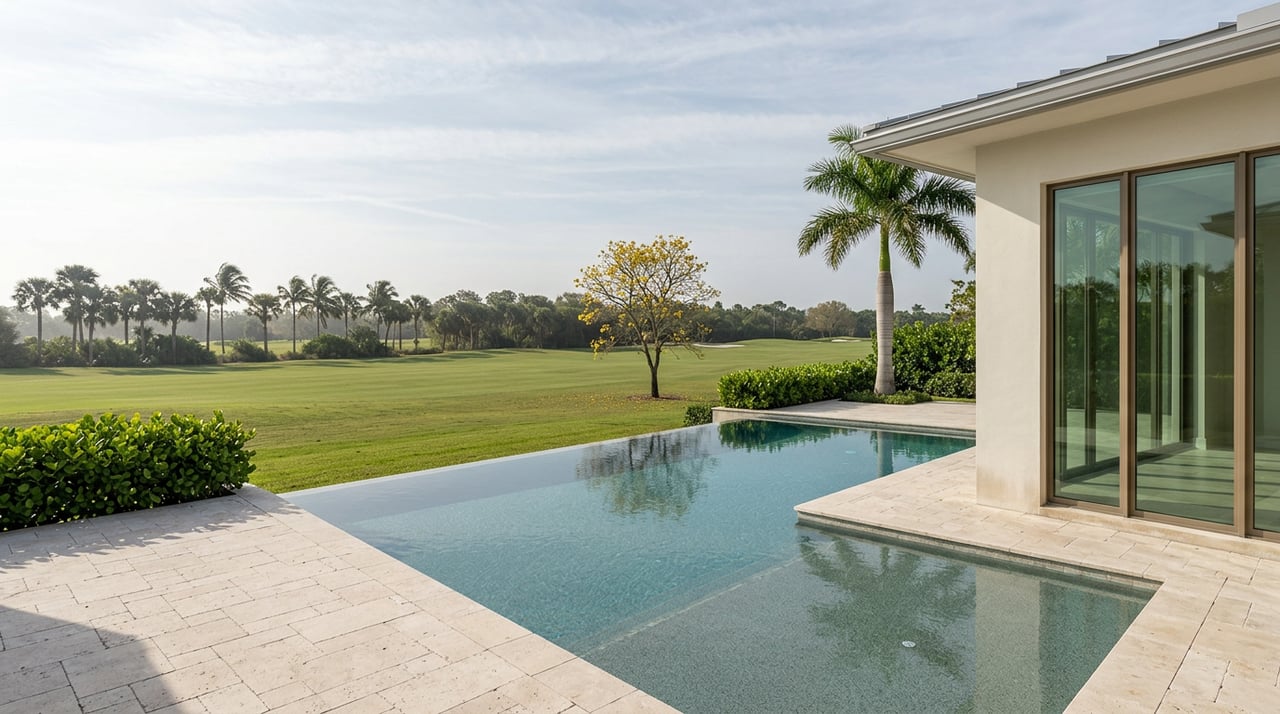
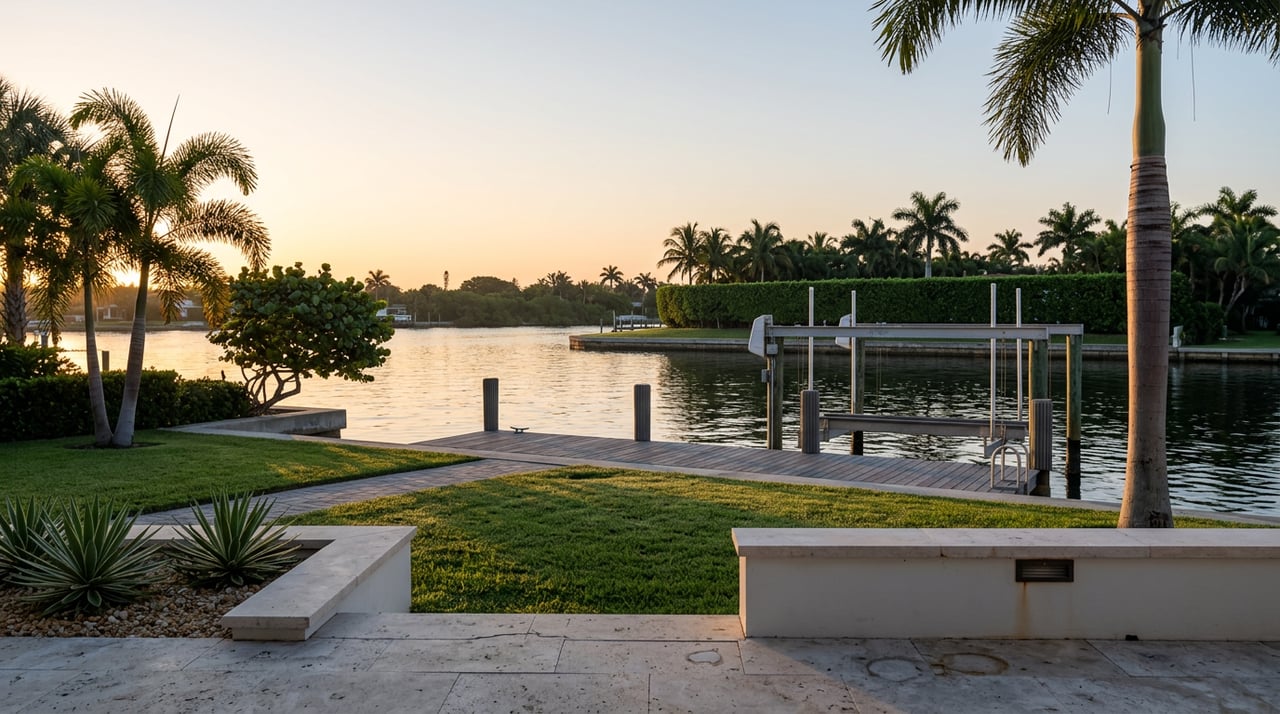
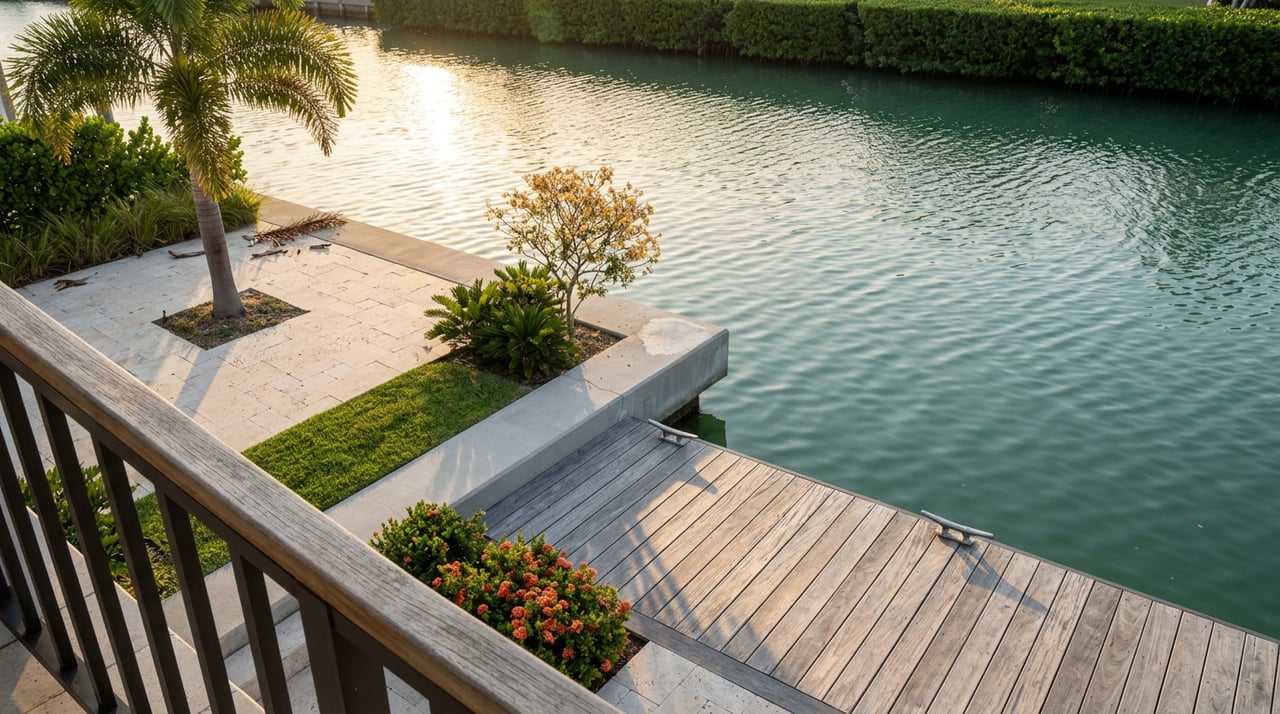
Harbor Place is seven homes. Not seven-plus-future-phases, not seven-so-far. Seven, full stop, built by one custom builder on half-acre-plus Intracoastal lots just off Palmwood Road, adjacent to The Bear's Club in Palm Beach Gardens. Each one came out of Couture's trademarked "Lifestyle Discovery Process," designed with Smith and Moore Architects, and finished with private docks built to hold a large yacht, Lutron lighting throughout, and construction specs that vary house to house because no two owners asked for the same thing. That is the appeal of the community. It is also exactly what makes a lender's appraisal harder here than almost anywhere else in Palm Beach Gardens.
A residential appraisal leans on the sales comparison approach: recent closed sales of similar homes, adjusted for differences in size, condition, and features. That approach works well when a subdivision has dozens of past transactions to draw from. With only seven homes, Harbor Place has a limited pool of potential comparable sales inside the gates; most of those homes have not changed hands more than once or twice since Couture built them. An appraiser working a file here cannot pull five recent closed sales from the same streets the way they would in a typical Palm Beach Gardens gated community with a hundred homes and steady turnover.
So they reach outside the gates. Palmwood Road itself has other large waterfront estates, some running past 13,000 square feet, but these are not part of Harbor Place and were not built by the same crew, to the same specifications, under the same design process. They sit outside any homeowners association, which means no shared architectural standard and no guarantee of comparable construction quality. An appraiser who pulls one of those as a comp is measuring a Harbor Place estate against a house that may share a zip code and a view of the Intracoastal and almost nothing else.
One Harbor Place resale on record described a home built in 2015 with poured concrete construction on both levels. That is not the default building method for custom homes in this part of Palm Beach Gardens. Most large residential construction here uses concrete block and stucco, sometimes called CBS, which costs meaningfully less per square foot to build than a poured-concrete structure and behaves differently in an appraiser's cost-approach calculations. If the appraiser's best available comp down the street was framed and built in CBS, and the subject property poured concrete floor to roof, the adjustment gap between the two is not cosmetic. It reflects a real difference in what it would cost to replace the structure, and it is the kind of detail that gets missed when nobody on the file has spent time on a jobsite.
This is where a contractor's eye earns its keep. A Harbor Place file reads differently through a builder's eyes than it does on a comp sheet. Poured concrete versus CBS, custom dock rated for a large yacht versus a standard residential lift, Lutron-integrated lighting versus a builder-grade panel: these are the line items that separate a house that happens to sit on the Intracoastal from one that was engineered as a single, non-repeatable project. An appraiser who is handed that distinction in writing, with documentation, is in a different position than one working from a blank comp sheet and a drive-by.
None of this means an appraisal gap in Harbor Place is unbeatable. It means the burden of proof shifts earlier in the transaction than most buyers and sellers expect. The documentation that helps an appraiser justify a value closer to the negotiated price tends to fall into a few categories:
None of this is exotic paperwork. Most of it already exists somewhere in a seller's files or a builder's archive. The difference between a smooth appraisal and a stalled one is usually whether that paperwork reaches the appraiser before the visit or gets produced afterward as a rebuttal.
For a seller, the practical implication is that a Harbor Place listing price built purely off what the last comparable Intracoastal estate fetched, wherever that estate happened to sit, is a guess dressed up as a number. The stronger approach treats the seven-home ceiling as a known constraint from the start and builds the case for value into the marketing file rather than waiting for a lender's appraiser to ask for it.
For a buyer, the practical implication is a cash cushion. A contract price that reflects what a one-of-one custom estate is actually worth to a buyer who wants exactly this house, on exactly this dock, can outrun what a comp-starved appraisal supports. Buyers who go in expecting that gap and who reserve the ability to bridge it, rather than assuming the appraisal will simply confirm the number they already agreed to, tend to close on schedule. Buyers who do not plan for it often find themselves renegotiating in the final weeks before closing, at the point in a transaction when nobody wants to renegotiate anything.
Does a low appraisal mean the price was wrong? Not necessarily. It often means the appraiser's available comps sat outside the gates and did not share the subject property's construction method, dock capacity, or design pedigree. A low number in a seven-home subdivision reflects a data problem as often as a price problem.
Can an appraiser use comps from a different gated community? Sometimes, if the appraiser judges another Palm Beach Gardens or North Palm Beach waterfront enclave to be reasonably similar and adjusts for the differences. The strength of that comparison depends entirely on how well documented the subject property's own specifications are, since the adjustments an appraiser makes are only as good as the information behind them.
Is this unique to Harbor Place? The scale is unusual. Most gated communities in Palm Beach Gardens have enough transaction history to generate internal comps over time. A permanent seven-home ceiling is rare, and it means the appraisal challenge here does not fade as the market matures. It is a structural feature of the community, not a phase it will grow out of.
If you own a home in Harbor Place, or you are underwriting an offer on one, the appraisal conversation is worth having before a contract is signed, not after a number comes back. Reback Realty has closed transactions across Palm Beach Gardens' most custom-built waterfront enclaves and can walk you through what a lender is likely to need to see on a file like this one. Request a Confidential Home Valuation and let's put together the documentation before anyone else asks for it.
This article is general information, not legal, tax or financial advice. Consult a qualified professional about your situation.
Stay up to date on the latest real estate trends.
We pride ourselves on informing and educating our clients in order to make better real estate decisions. Contact us today to find out how we can be of assistance to you!
Reback Realty
11420 US HIGHWAY 1 PMB 122 NORTH PALM BEACH FL 33408