
Tequesta Waterfront Homes and Bridge Clearance Rules
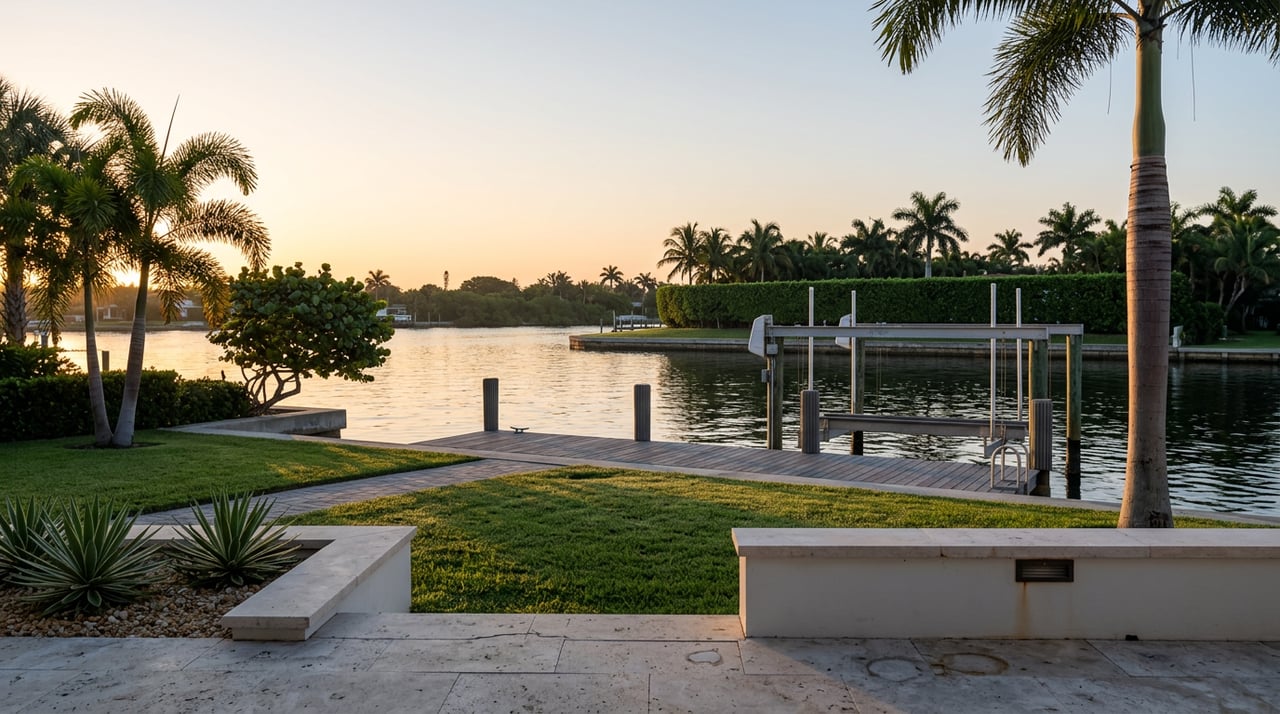
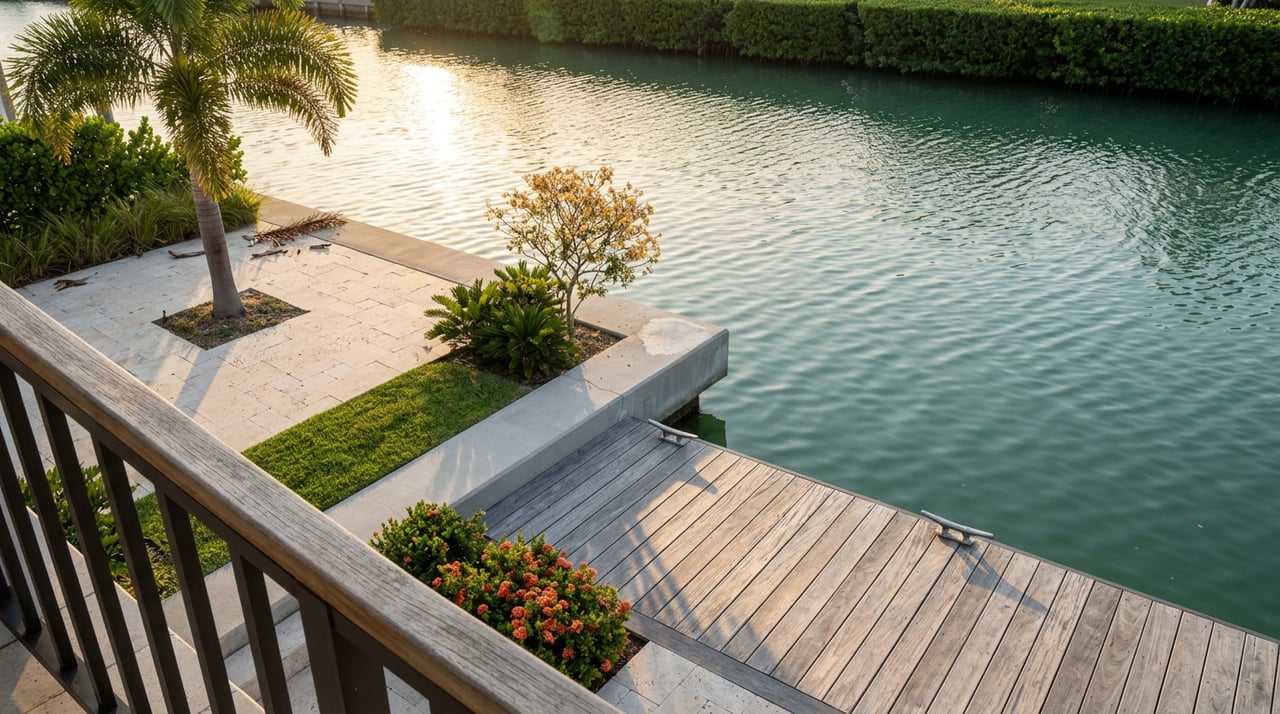
Two docks in Tequesta can sit within a mile of each other, carry the same price tag, and photograph almost identically for the listing. Same seawall, same lift, same "waterfront" line in the description. One of them puts a buyer thirty minutes from the Jupiter Inlet with room to spare. The other tops out at a 26-foot bay boat because of a bridge that was built before most of the neighborhood existed. Nobody puts that detail in the listing photo, and it's the single fact that separates two otherwise identical purchases.
This is the part of Tequesta's market that a median price can't explain, and it matters more this year than most, because the region just finished a $122 million bridge project that a lot of buyers will assume solved the problem. It didn't. Not for the addresses where it counts.
Tequesta sits where the North Fork of the Loxahatchee River meets the Intracoastal Waterway, which sounds like unrestricted boating until you look at what spans the water between a given dock and the open river. Two fixed bridges cross the North Fork: the Tequesta Drive bridge, with a vertical clearance commonly cited between roughly 11 and 14 feet at mean high water depending on the survey, and the Island Way bridge, tighter still at around 12 feet. Fixed means fixed. There's no waiting for an opening, no calling ahead on the radio.
For a homeowner behind either of those spans, that number sets a hard ceiling on what kind of boat lives at the dock. A low-profile 24 to 28 foot bay boat with an 8 to 9 foot air draft passes underneath without a second thought. A 33 to 36 foot center console with a folding hardtop and outriggers folded down might clear Tequesta Drive but get stopped cold at Island Way depending on antenna height. Anything larger, a 55 to 65 foot sportfish or an express cruiser with real air draft, simply isn't a candidate for that address. Not because the dock can't hold it. Because the bridge won't let it through.
Compare that to a home east of those two spans, closer to where the river opens toward the Intracoastal and the Jupiter Inlet. The same fixed-bridge math doesn't apply, and a 45-foot boat with real ocean-going capability becomes realistic. That single geographic fact, not the dock length or the pool or the square footage, is what separates two homes that look nearly identical on paper.
Here's where the timing gets interesting. The US-1 bridge over the Loxahatchee River and Intracoastal Waterway, the crossing that connects Jupiter and Tequesta along the coastal highway, was fully replaced in a project that finished in early 2026 after starting construction in 2021. The old 1958 span had two lanes each direction and no bike lanes. The new one is a twin double-leaf drawbridge with up to 42 feet of vertical clearance and a 125-foot navigable channel, a dramatic upgrade that also reduced the number of piers in the water from nineteen down to four to improve water flow through the inlet.
That's a genuinely large piece of infrastructure news for this stretch of Palm Beach County, and it's easy to read it as evidence that bridge access in the Tequesta area got better across the board this year. For boats already running the main Intracoastal channel near the inlet, it did. But the US-1 bridge was never one of the constraints on North Fork properties. It sits on a different route entirely. A buyer looking at a canal-front home behind Tequesta Drive or Island Way gets zero benefit from the US-1 replacement, because their bottleneck was never that crossing. It was, and still is, the two smaller fixed bridges closer to home. Those clearances haven't changed and there's no funded project to change them.
The lesson for anyone comparing Tequesta neighborhoods this year: a headline about improved regional bridge infrastructure doesn't tell you anything about your specific dock. You have to check the bridge between your address and the ocean, not the one that made the news.
| Bridge | Type | Vertical Clearance (MHW) | What It Means for a Buyer |
|---|---|---|---|
| Tequesta Drive (North Fork) | Fixed | Roughly 11 to 14 feet | Caps most boats to smaller center consoles and bay boats |
| Island Way | Fixed | Roughly 12 feet | Tighter than Tequesta Drive; many boats need folding hardware |
| Alternate A1A (SR-811) | Fixed | Roughly 25 to 26 feet | Clears most sportfish towers and outriggers |
| US-1 / Federal Highway | Drawbridge, on demand | Up to 42 feet (new, completed early 2026) | Not a constraint for North Fork addresses; relevant to main channel traffic near the inlet |
Once the bridge geography is clear, the price segmentation in Tequesta's waterfront market starts to make sense in a way a single median number never will. Canal-front homes in communities behind the North Fork's fixed bridges, places like River Ridge, Bay Harbor, Anchorage Point, Rolling Hills, and similar riverfront neighborhoods, have generally traded in the range of roughly $800,000 to $2.5 million as of the middle of this year. These properties often sit on larger lots with genuine privacy from Intracoastal boat traffic, and the trade-off is a functional cap on vessel size, typically 25 to 30 feet, along with a longer transit time to reach open water.
Direct Intracoastal properties, the ones with 60 feet or more of frontage east of the constraining bridges, have generally commanded $1.8 million to well over $5 million in that same window, with docks capable of handling vessels up to 45 feet and a more direct run to the Jupiter Inlet. Communities like Riverside on the Loxahatchee and Tequesta Country Club sit closer to this side of the geography. During the broader Palm Beach County luxury surge in the second quarter of this year, waterfront properties in Tequesta were commanding meaningful premiums over comparable inland homes, and the bridge access story is a large part of why that premium holds even when two homes look similar from the street.
None of this means canal-front is a lesser purchase. For a family that wants a pontoon boat, a kayak launch, and quiet water away from Intracoastal wake, the North Fork behind Tequesta Drive is often the better fit at a lower price. The point is that the price difference between the two tiers isn't cosmetic. It's structural, and it's set by bridges that were built decades ago and aren't being rebuilt anytime soon.
The most common oversight in a Tequesta waterfront purchase has nothing to do with the house. It's assuming that canal access equals deep-water capability without confirming depth at low tide. A canal that shows four to five feet at high tide can leave a boat scraping bottom six hours later, and that gap rarely shows up on a listing sheet. The only way to know is to check depth soundings at low tide before writing an offer, not after closing.
Seawall condition is the second blind spot. Buyers tend to focus on the house and treat the seawall as background scenery, but replacement runs roughly $400 to $800 per linear foot depending on material and access, a cost that can turn a good deal into a break-even one if the wall is near the end of its life. This is the kind of assessment that benefits from a construction-trained eye rather than a walk-through glance, which is part of why David Reback's background as a licensed contractor shapes how our team evaluates waterfront property condition at Reback Realty. A dock that looks fine in a listing photo and a seawall that's due for replacement in three years are two very different financial pictures.
A few questions worth asking before an offer goes in on any Tequesta waterfront property:
Inventory in Tequesta's waterfront segment tends to follow a predictable seasonal rhythm. Listings typically peak between May and August as seasonal residents prepare to head north, which is also the widest selection window of the year even though it overlaps with hurricane season. Winter months from December through March see the fewest new listings paired with the most buyer competition, as seasonal residents and visitors discover the market at the same time. Shoulder seasons in September through November and again in April tend to offer a more balanced mix of inventory and competition, which makes right now, early September, a reasonable window to start looking seriously before winter demand tightens things up.
Whichever tier fits your boat and your budget, the bridge math is the same either way. It was true before the US-1 project started in 2021, it was true while the detour ran through the surrounding intersections, and it's still true now that the new span is open. The bridges that actually gate your dock are the ones nobody photographed for the news.
Does a canal-front home in Tequesta still count as true waterfront? Yes. It has navigable access to the Loxahatchee River and, through it, the Intracoastal and the ocean. The distinction isn't whether it's waterfront, it's what size vessel can actually use that access given the fixed bridges along the route.
Will the fixed bridges on the North Fork ever be replaced or raised? There's no funded project to raise Tequesta Drive or Island Way at this time. The US-1 replacement addressed a separate crossing entirely, and its completion doesn't change the clearance math for North Fork addresses.
If you're comparing a canal-front lot against a direct-access address in Tequesta and want a read on what a specific dock, seawall, and bridge route actually support, that's the kind of due diligence our team walks through before you write an offer, not after. Reback Realty has spent decades on this stretch of river and knows which questions the listing photo won't answer. Request a Confidential Home Valuation and we'll start with the bridge, not the brochure.
Stay up to date on the latest real estate trends.
We pride ourselves on informing and educating our clients in order to make better real estate decisions. Contact us today to find out how we can be of assistance to you!
Reback Realty
11420 US HIGHWAY 1 PMB 122 NORTH PALM BEACH FL 33408